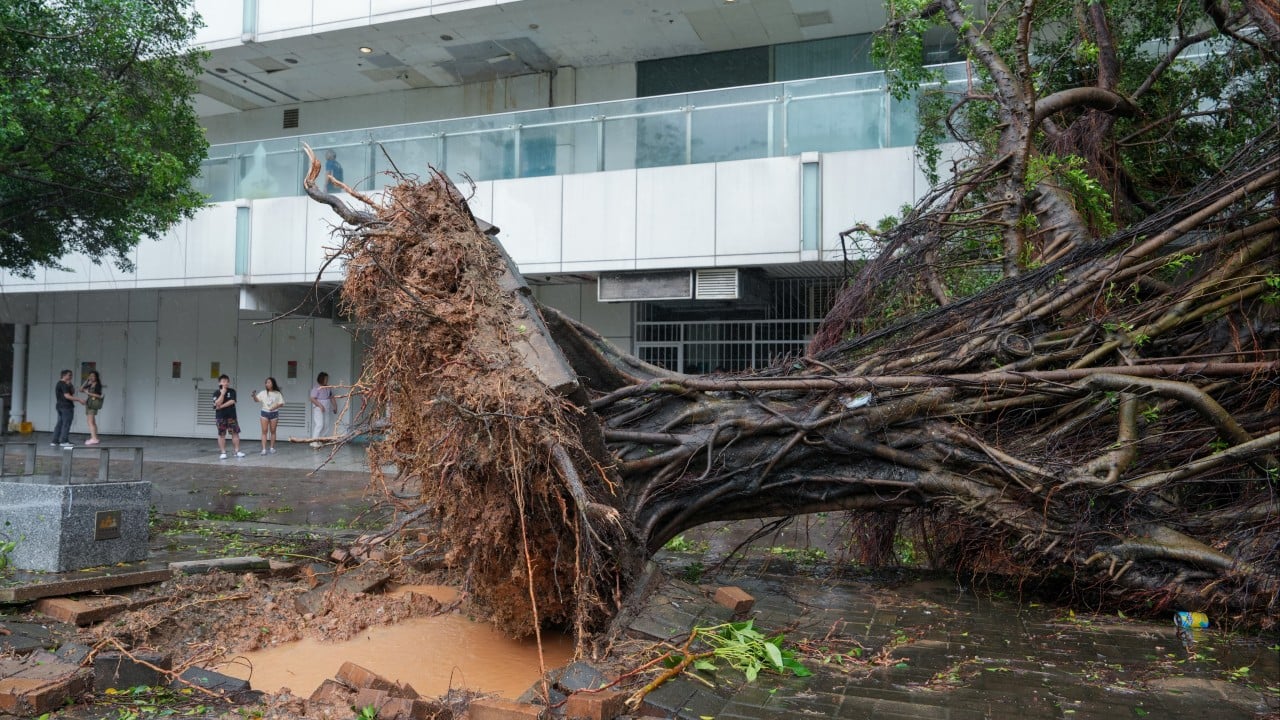
Urban climate resilience in high-density metropolitan environments depends entirely on tracking ocean-atmospheric coupling mechanisms. When sea surface temperatures in the central and eastern equatorial Pacific rise, the resulting El Nino phase dictates a profound structural shift in regional weather systems. For Hong Kong, this phenomenon alters tropical cyclone trajectories, thermodynamic energy absorption rates, and seasonal precipitation baselines. Evaluating the upcoming seasonal transition requires discarding generalized forecasts in favor of a rigorous examination of physical drivers, spatial variables, and infrastructure vulnerability functions.
The Thermodynamic Mechanics of Pacific Warming
The primary driver of extreme seasonal volatility lies in the spatial displacement of warm water pools. During standard meteorological phases, warm surface waters pool in the western Pacific near maritime Asia. As an El Nino event intensifies, weakened trade winds allow this thermal mass to shift eastward toward the central and equatorial Pacific.
This eastward shift alters the genesis zones of tropical cyclones. Storms originating further east across the open ocean possess an extended spatial runway before reaching coastal Asia. This expanded trajectory provides a prolonged duration for continuous thermal energy absorption and moisture accumulation. Consequently, while the total frequency of tropical cyclones entering the 500-kilometer monitoring radius of Hong Kong may remain average or decrease, the statistical probability of individual systems maturing into super typhoons increases exponentially.
Atmospheric moisture retention capacity scales directly with ambient temperature increases, following the Clausius-Clapeyron relation. A warmer troposphere holds significantly higher vapor concentrations, converting standard frontal boundaries and monsoonal troughs into concentrated, high-velocity precipitation events.
The Urban Vulnerability Matrix
Evaluating how macro-climate shifts impact a localized urban center requires deconstructing the exposure variables unique to high-density coastal topography. Hong Kong faces a multi-vector vulnerability profile defined by thermal stress, hydraulic overload, and slope stability thresholds.
- Thermal Loading and Public Health Stress: Sustained high atmospheric temperatures, amplified by urban heat island dynamics, push physiological limits. Empirical public health data indicates that extreme heat events account for significant annual mortality rates, frequently surpassing total casualties from localized acute natural disasters. Vulnerability clusters heavily among demographics with pre-existing cardiovascular and metabolic pathologies.
- Hydraulic Infrastructure Capacity: Drainage networks are engineered around historical rainfall intensity frequency curves. Concentrated downpours driven by moisture-laden storm systems routinely exceed municipal run-off clearance rates. This creates sudden surface water accumulation in low-lying urban sectors and commercial basements.
- Coastal Surge and Seawater Backflow: Elevated baseline sea levels, compounded by low-pressure storm surges, compromise coastal defense mechanisms. Seawater backflow through municipal drainage outfalls introduces tidal flooding into inland municipal zones independent of direct rainfall accumulation.
- Geotechnical Slope Integrity: Prolonged and intense precipitation saturation reduces matrix suction in residual and colluvial soils. Steep urban gradients flanked by high-density residential developments face elevated landslide probabilities as pore-water pressures increase along slip surfaces.
Systemic Cost Functions and Risk Mitigation
Managing these structural pressures requires moving past reactive emergency management toward probabilistic asset allocation. Urban municipal systems operate under a tight margin where infrastructure design standards face continuous obsolescence against non-linear climate acceleration.
The economic cost function of an unmitigated super typhoon or sustained heatwave cycle manifests across multiple balance sheets. Direct physical damage to maritime infrastructure, commercial downtime, healthcare system surges, and asset depreciation compound rapidly. Traditional insurance models struggle to price these compounding tail risks accurately, necessitating public sector backstops and mandatory engineering mandates for structural reinforcement.
Deploy capital toward retrofitting subsurface drainage bottlenecks in known topographic collection basins rather than broad-spectrum surface cleaning. Upgrade real-time geotechnical sensor arrays on priority hillside gradients adjacent to high-density residential corridors to automate early evacuation protocols before pore-water thresholds trigger structural failure.