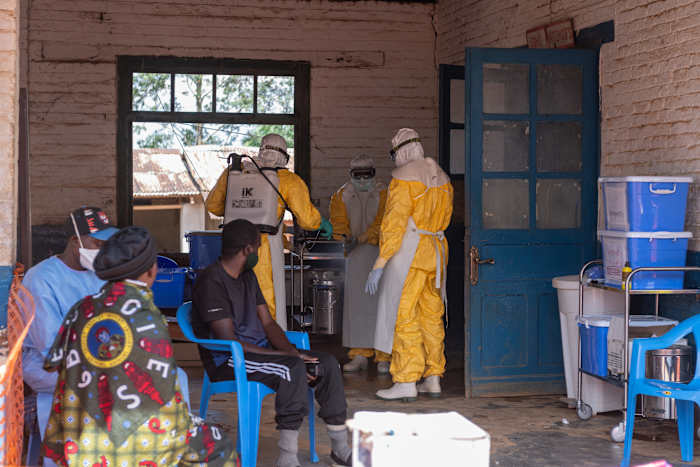
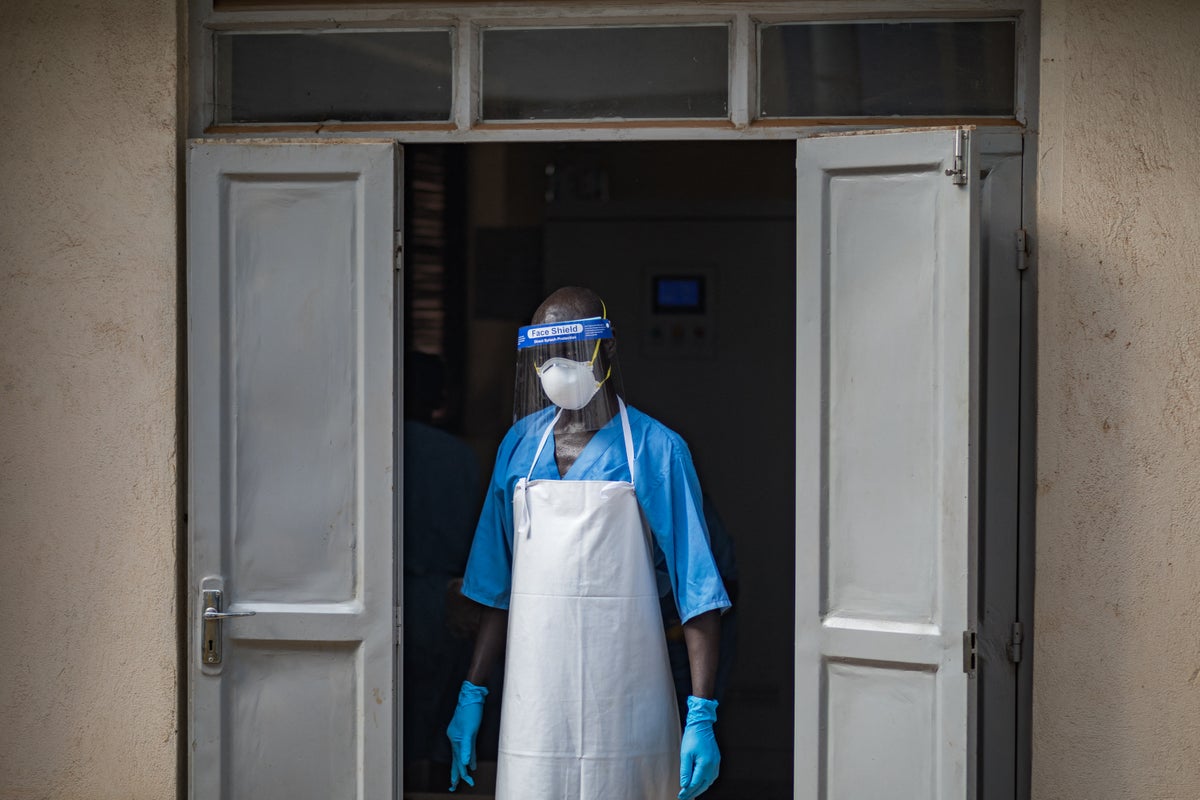
Epidemiological containment relies on a precise calibration between population mobility restrictions and localized infection suppression. The World Health Organization (WHO) declaration of the Bundibugyo Ebola strain outbreak as a Public Health Emergency of International Concern (PHEIC) highlights a core friction in global health strategy: the operational tension between national border closures and targeted epidemiological interventions. While the epicenter remains concentrated in the Ituri province of the Democratic Republic of Congo (DRC)—accounting for 515 of the country's 544 confirmed cases—Uganda's detection of 19 cases, primarily driven by cross-border movement, has triggered localized containment measures and a unilateral border shutdown.
Evaluating the efficacy of this response requires moving beyond political endorsements to analyze the underlying structural mechanics of transmission vectors, case fatality variables, and the economic feedback loops that dictate compliance during a health crisis.
The Transmission Function and Border Economics
The mathematical reality of infectious disease control dictates that a blanket border closure rarely yields a sterile epidemiological barrier. Instead, it alters the transmission function by shifting formal, screened migration to informal, unmonitored border crossings.
In the DRC-Uganda border corridor, the economic interdependence of local populations operates as a baseline variable. The cross-border movement is not merely discretionary travel; it represents primary economic survival and critical healthcare-seeking behavior. Data indicates that approximately 70% of the recorded cases in Uganda involved individuals crossing from the DRC specifically to access superior medical infrastructure during the opening weeks of the outbreak.
When a formal border is sealed, the immediate consequence is a data blackout. The mechanism operates through specific behavioral shifts:
- Symptom Concealment: Individuals symptomatic with the Bundibugyo strain evade official checkpoints to avoid detention or forced quarantine, rendering border temperature screenings useless.
- Loss of Traceability: Unregulated crossings bypass the collection of manifests, names, and points of origin, breaking the contact-tracing chain before it begins.
- Evasion of Early Isolation: Patients enter the host country undetected, delaying clinical presentation until viral loads are high and secondary transmission rings have already formed within the community.
The epidemiological cost of a border closure is therefore an increase in unmonitored community transmission, which outweighs the marginal reduction in total volume achieved by blocking formal transit points.
Case Fatality Rate Asymmetry
The current outbreak exhibits a Case Fatality Rate (CFR) of 17.4%. While structurally lower than historic Zaire ebolavirus outbreaks—which frequently exceed 50%—this metric is highly sensitive to the timing of therapeutic intervention and institutional capacity. The asymmetry in mortality between the DRC epicenter and Uganda highlights a stark variation in clinical execution and resource density.
$$\text{CFR} = \left( \frac{\text{Total Deaths}}{\text{Total Confirmed Cases}} \right) \times 100$$
In Uganda, the clinical management matrix has kept the internal fatality rate below 1% for the 19 identified cases. This outcome is not accidental; it is driven by an existing public health infrastructure optimized during previous outbreaks, including the 2022 Sudan ebolavirus response.
The Triad of Clinical Suppression
[Epidemiological Surveillance] ──> [Early Isolation] ──> [Optimized Supportive Care]
- Rapid Decoupling via Incident Command Systems: Uganda's immediate activation of its Incident Management System (IMS) allowed for the rapid deployment of trained personnel to isolation units, preventing hospital-acquired (nosocomial) amplification.
- Aggressive Contact Tracing Protocols: The utilization of standardized data collection platforms like Go.Data enables field teams to map transmission rings within 24 to 48 hours of index case validation.
- Optimized Supportive Care Delivery: In the absence of an approved, widely distributed vaccine or targeted therapeutic for the Bundibugyo strain, survival rates depend entirely on aggressive fluid resuscitation, electrolyte correction, and the immediate management of secondary infections.
Mass Gathering Demobilization and Viral Velocity
The velocity of an Ebola outbreak is heavily influenced by superspreading events where population density accelerates the reproductive number ($R_0$). The decision by Ugandan authorities to cancel high-density public events, such as the annual Martyrs Day celebrations which historically draw hundreds of thousands of regional pilgrims, serves as a textbook example of proactive risk mitigation.
The mechanics of filovirus transmission require direct contact with bodily fluids. In a dense crowd, the probability of exposure increases exponentially if an individual exhibits advanced clinical symptoms (such as vomiting or hemorrhaging). By eliminating these high-probability transmission hubs, the reproductive velocity of the virus is artificially suppressed, preventing a localized border spillover from transforming into an unmanageable urban epidemic within Kampala.
Structural Limitations of the Containment Framework
No containment strategy is devoid of systemic vulnerabilities. While Uganda's internal clinical response has proven highly efficient, the broader regional strategy faces three structural bottlenecks:
- Diagnostic Delays: Confirming a rare strain like Bundibugyo requires specialized Polymerase Chain Reaction (PCR) assays. Rural border clinics often lack these diagnostic footprints, requiring samples to be transported to central referral laboratories in Kampala, creating a 24- to 72-hour visibility lag.
- Porosity of the Frontier: The physical geography separating western Uganda from eastern DRC spans hundreds of kilometers of terrain that cannot be effectively policed by static infrastructure, making absolute physical containment an impossibility.
- Donor Financing Friction: Although the Pandemic Fund and joint Africa CDC-WHO initiatives have pledged capital to execute containment within a six-month window, the deployment of international funding historically lags behind the exponential growth phase of an outbreak.
Strategic Realities
To prevent the current PHEIC from destabilizing the regional economy while ensuring absolute pathogen containment, the strategic orientation must pivot away from blunt isolationism toward targeted, high-yield epidemiological interventions.
Transition to Risk-Stratified Border Corridors
Unilateral border closures must be replaced with designated humanitarian and trade corridors. These corridors must feature mandatory, rapid-turnaround screening architecture, integrated isolation units directly at the boundary line, and immediate registration protocols. This maintains economic stability while actively incentivizing symptomatic individuals to seek formal, monitored entry points rather than clandestine routes.
Decentralization of Diagnostic Footprints
International capital must prioritize the immediate deployment of mobile laboratory units equipped with multiplex PCR assays to boundary districts such as Kasese and Bundibugyo. Reducing the time-to-confirmation from days to hours is the single most effective way to compress the contact-tracing window and minimize unmonitored community exposure.
Pre-Positioning Ring-Vaccination Infrastructure
While candidate vaccines for specific rare strains undergo ongoing clinical evaluation, the regulatory and logistical frameworks for ring-vaccination protocols must be established in border communities prior to the wider distribution of investigational doses. This ensures that if a localized outbreak breaches containment lines, the ring-fencing of contacts can begin within a 12-hour operational window.
The focus must remain on source control at the epicenter in Ituri province while maintaining open, highly scrutinized transit pathways that preserve data visibility and clinical access.
The following video discusses the global health implications and strategic international updates regarding the current containment efforts in the region: WHO Escalates Response to Ebola Outbreak. This analysis provides essential context on the changing risk classifications and international funding mechanisms deployed to manage the epidemic.