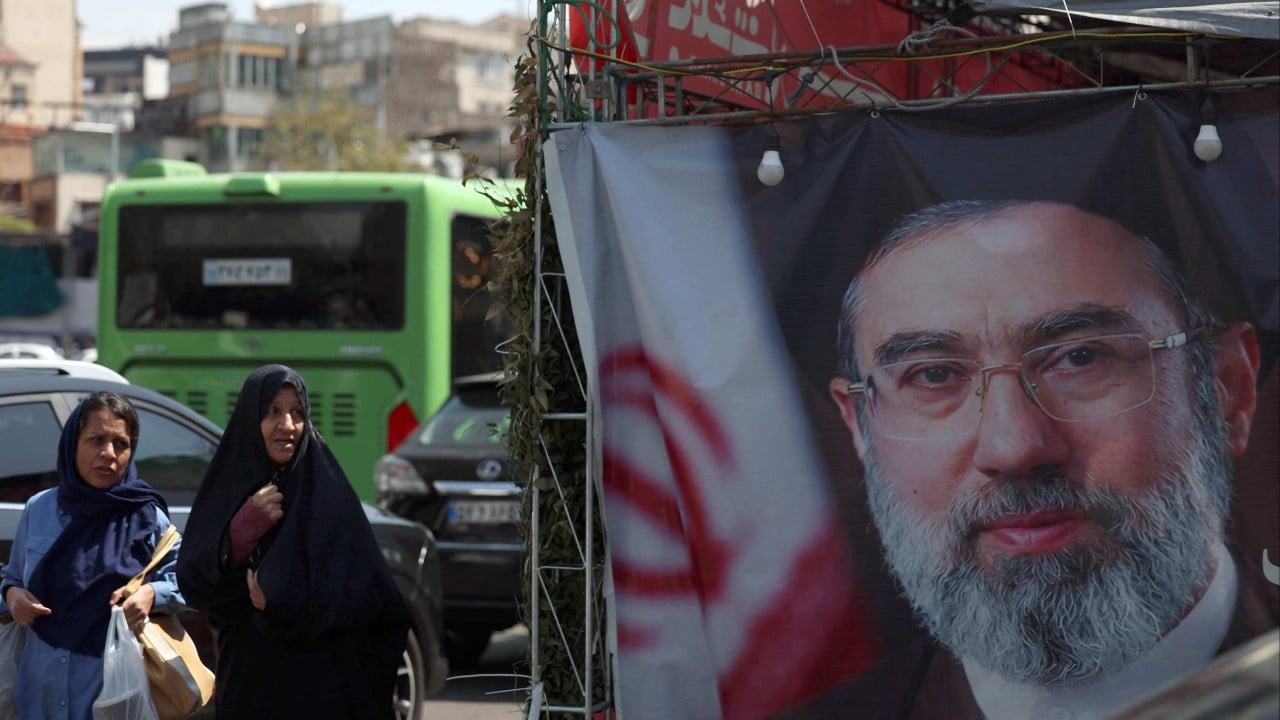
The declaration by Tehran on April 17, 2026, that the Strait of Hormuz is "completely open" for commercial transit represents a tactical de-escalation rather than a strategic pivot. While the immediate 10% collapse in Brent crude futures to $89 per barrel signals market relief, the underlying structural reality remains unchanged: the United States has successfully decoupled maritime freedom of navigation from Iranian economic access. By maintaining a unilateral naval blockade on Iranian ports while welcoming the passage of third-party commercial vessels, Washington has effectively bifurcated the world’s most critical maritime chokepoint into a "permissive zone" for global trade and a "denial zone" for the Iranian state.
The Dual-Track Blockade: Separating Transit from Revenue
The reopening of the Strait follows a 48-day period of near-zero traffic initiated after the February 2026 strikes on Iranian nuclear and command infrastructure. The current operational environment is defined by two distinct, non-overlapping enforcement mechanisms that render the Iranian "opening" economically impotent for the Islamic Republic. Don't forget to check out our recent article on this related article.
- The Freedom of Navigation Track: Iran’s Ministry of Foreign Affairs and the Ports and Maritime Organization have signaled that vessels not affiliated with "hostile powers" may resume transit. This is a recognition of the Cost Function of Closure: the total stoppage of the Strait was causing symmetric damage to Iran’s few remaining regional partners and Chinese buyers, while inviting a NATO-led kinetic response to clear sea mines.
- The Interdiction Track: U.S. Central Command (CENTCOM) has maintained the blockade of Iranian-specific maritime commerce. This policy, enforced by the persistent presence of carrier strike groups and land-based interdiction assets, ensures that while a Saudi or Kuwaiti tanker may pass through the Strait, any vessel calling at Kharg Island or Bandar Abbas is intercepted or turned back.
This creates a Strategic Asymmetry. Iran has surrendered its primary leverage—the ability to hold 21% of global petroleum liquids hostage—without receiving a reciprocal easing of the U.S. naval blockade.
The Three Pillars of US Economic Encirclement
The U.S. strategy in the second quarter of 2026 has moved beyond traditional sanctions into physical asset denial. This shift rests on three pillars that the Iranian reopening of the Strait fails to address. If you want more about the background of this, The New York Times offers an informative breakdown.
1. Kinetic Enforcement of the "Ghost Fleet" Neutralization
Previous "Maximum Pressure" campaigns relied on financial blacklisting and insurance sanctions to deter the Iranian "Ghost Fleet." The 2026 framework utilizes Direct Interdiction. Since April 13, CENTCOM has implemented a policy of "vessel reversal," where tankers suspected of carrying Iranian crude are physically boarded or ordered to return to port under threat of elimination. This removes the "Shadow Fleet" advantage by raising the physical risk to the hull and crew beyond what even illicit premiums can cover.
2. The Transactional Material Exchange Requirement
The U.S. executive branch has signaled a transition from a currency-based sanctions regime to a Resource-for-Access model. President Trump’s recent assertions that "no money will exchange hands" and that the U.S. expects "nuclear material" in exchange for the lifting of the port blockade indicates a refusal to return to the JCPOA-style financial liquidity. The blockade is not a punishment for the Strait's closure; it is a tool to force the physical removal of enriched uranium and the dismantlement of enrichment infrastructure.
3. Structural Redundancy and Market Calibration
The global economy’s response to the February "Hormuz Shock" led to a permanent shift in energy logistics. The Geopolitical Risk Premium (GRP), which spiked to $35 per barrel in March, has established a new "structural floor." Even with the Strait open, the perceived probability of future disruptions has forced importing nations—particularly India and the G7—to accelerate the build-out of non-Hormuz routing and strategic petroleum reserve (SPR) capacity.
The Logical Fallacy of Iranian Reciprocity
Tehran’s strategy assumes that the restoration of maritime "normality" will generate international pressure on Washington to ease the port blockade. This assumes a Linear Escalation Ladder that no longer exists. The U.S. has successfully framed the opening of the Strait as a "return to international law" (compliance with the UN Convention on the Law of the Sea) rather than a concession that requires a reward.
The bottleneck for the Iranian economy is no longer the 21-mile width of the Strait, but the Legal and Physical Perimeter established around Iranian littoral waters.
- Export Suppression: Despite the "open" Strait, Iranian exports remain trapped in a cycle of dark-ship activity and AIS spoofing, which are increasingly detectable via 2026-standard satellite persistence.
- Infrastructure Degradation: The Siri Island storage fire and ongoing strikes on refining capacity mean that even if the blockade were lifted, the "Time-to-Market" for Iranian refined products has been pushed back by 12 to 18 months.
Strategic Forecast: The Stalemate of Sanctioned Sovereignty
The opening of the Strait of Hormuz is a net positive for global energy stability, as evidenced by the retreat of the U.S. Dollar Index (DXY) and the surge in the S&P 500. However, for the Iranian state, this is a retreat without a treaty. The U.S. naval blockade acts as a "Secondary Strait"—a man-made chokepoint that covers the same geographical area but targets only one nation's GDP.
The current ceasefire in Lebanon provides a temporary window for diplomacy, but the U.S. demand for a "100 per cent complete" transaction regarding nuclear material suggests the economic squeeze will intensify as physical interdictions become more frequent. Ship operators will likely prioritize the extraction of existing vessels from the Persian Gulf before committing new hulls to the region, creating a "lag-time" in supply chain normalization that prevents a total price collapse.
The strategic play for global stakeholders is to treat the "open" Strait as a high-risk corridor rather than a stabilized route. Until the U.S. maritime blockade of Iranian ports is formally rescinded, the region remains in a state of Active Enforcement, where the freedom of navigation is a privilege granted by naval superiority, not a guaranteed right of the littoral state. Tehran has surrendered its only gun in the room; Washington has yet to holsters its own.
Maintain a defensive posture on energy-linked equities and prepare for a sustained "Cold Blockade" phase where the volume of Iranian crude on the water remains stagnant, regardless of the Strait’s official status.