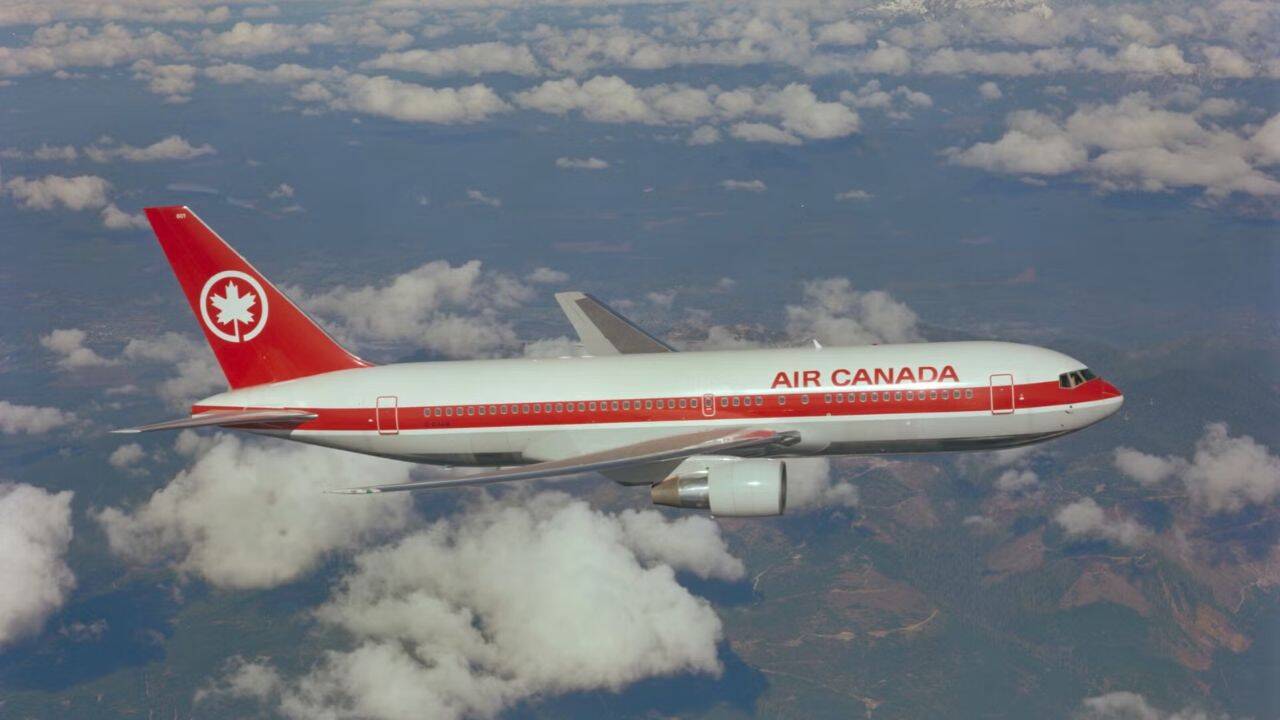
On July 23, 1983, Air Canada Flight 143 exhausted its entire fuel supply at 41,000 feet over central Canada, transforming a twin-engine Boeing 767-233 into a 132-ton unpowered glider with 61 passengers and 8 crew members aboard. The survival of all 69 occupants was not an isolated miracle of piloting; it was the deterministic result of a dual-phase operational sequence where catastrophic systemic error collided with unconventional manual execution. Standard aviation post-mortems often treat the Gimli Glider as a human-interest story about lucky airmanship, ignoring the underlying mechanics of socio-technical system collapse and aerodynamic energy management. Deconstructing this event requires separating the organizational failures that starved the engines from the kinetic physics that saved the airframe.
The Architecture of Systemic Fuel Starvation
Modern commercial aviation operates on the principle of defense-in-depth, a multi-layered safety architecture designed so that no single point of failure can compromise flight integrity. Flight 143 demonstrated how an organization can inadvertently synchronize failures across every redundant layer simultaneously. The causal chain did not begin at the fuel truck in Montreal; it originated in corporate transition management, maintenance deferral protocols, and interface design flaws. You might also find this connected article insightful: Why Pope Leo Risked a South American Tour Weeks After Lung Surgery.
The Metric Transition Friction
In 1983, the Canadian aviation sector was transitioning from imperial measurements (pounds) to the metric system (kilograms). Air Canada’s newly acquired Boeing 767 fleet was the first in the carrier's inventory calibrated exclusively in metric units, whereas the rest of the airline's fleet—and the mental models of its ground crews—remained anchored in imperial specifications.
This split created a persistent cognitive trap. Calculating fuel mass requires multiplying volume (liters) by specific gravity (density). Under imperial protocols, fuelers multiplied liters by approximately 1.77 to derive weight in pounds. Under the new metric standard, the conversion factor was 0.803 kilograms per liter. On July 23, both the ground refueling crew and the flight deck crew applied the familiar imperial density factor (1.77) to a metric load target (22,300 kilograms). The arithmetic produced a figure of 22,300 pounds of fuel—roughly 10,115 kilograms, or less than half the 20,400 kilograms required to reach Edmonton from Montreal via Ottawa. As reported in latest reports by TIME, the results are notable.
Cascading Redundancy Failure
A unit-conversion error should have been caught by automated telemetry or cross-checking protocols. Three distinct mechanisms failed to intercept the discrepancy:
- The Fuel Quantity Indication System (FQIS) Defect: The Boeing 767 utilized a dual-channel digital processor to calculate and display fuel loads. A known manufacturing defect—a faulty solder joint on a circuit board—disabled Channel A. Normally, Channel B could assume the load, but a maintenance technician in Edmonton had discovered days earlier that pulling a specific circuit breaker restored the cockpit gauges temporarily. When a Montreal technician attempted to troubleshoot the system prior to Flight 143, he left the circuit breaker pulled and tagged, inadvertently blinding both channels and leaving the cockpit fuel gauges completely blank.
- Minimum Equipment List (MEL) Misinterpretation: Under standard aviation regulations, an aircraft may dispatch with inoperative instruments if alternative verification procedures exist. Captain Robert Pearson and First Officer Maurice Quintal consulted the MEL, which erroneously permitted dispatch with a blank FQIS provided the fuel load was verified via manual drip-stick measurements. Maintenance personnel had misread the revision status of the MEL; the Boeing 767 was actually prohibited from flying without a functioning FQIS.
- The Drip-Stick Verification Loop: When ground technicians used magnetic drip sticks under the wings to measure fuel depth in centimeters, they converted the readings to liters and handed the numbers to the flight crew. The pilots then manually calculated the mass using the incorrect 1.77 specific gravity constant. Repeating the calculation three times—in Montreal and again during the stopover in Ottawa—produced the exact same erroneous result because the underlying assumption remained unchallenged. Confirmation bias locked the crew into a flawed mathematical model.
Telemetry Decay and Engine Flameout
The Boeing 767-200 represented a generational leap in cockpit automation, replacing the traditional three-person flight deck (pilot, co-pilot, flight engineer) with a two-person glass cockpit monitored by the Engine Indicating and Crew Alerting System (EICAS). While EICAS reduced workload during normal operations, its alert hierarchy struggled to communicate a cascading starvation event that the aircraft's computers assumed was impossible.
At 20:03 Central Daylight Time, while cruising at 41,000 feet near Red Lake, Ontario, the cockpit warning system sounded four rapid chimes—the alert for low fuel pressure in the left wing tank. Captain Pearson and First Officer Quintal interpreted this as a localized fuel pump failure. Because gravity feed can normally supply engines at lower altitudes, the crew followed standard checklist procedures, which did not immediately signal an empty tank.
Minutes later, a second alarm indicated low fuel pressure in the right wing tank. The probability of simultaneous, independent pump failures across both wings is statistically negligible, yet the crew’s mental model—reinforced by three manual fuel calculations—resisted the reality of exhaustion.
At 20:11, the left Pratt & Whitney JT9D turbofan spooled down. The crew initiated a drift-down descent toward Winnipeg, which offered the nearest major runway and emergency infrastructure. Within four minutes, the right engine flamed out. The EICAS screen went dark, replaced by a continuous, sharp chime that neither pilot had ever heard in simulator training: the "all-engine-out" warning.
Unpowered Systems Architecture
Losing both engines on a fly-by-wire or hydraulically boosted wide-body airliner does not merely eliminate thrust; it severs the primary generation of electrical and hydraulic power required to move the flight control surfaces. Without hydraulic pressure, the aerodynamic forces acting on the Boeing 767's massive ailerons, elevators, and rudder render them physically immovable by human muscle alone.
The Ram Air Turbine (RAT) Bottleneck
To prevent total loss of control during dual-engine failure, Boeing engineered a last-resort backup: the Ram Air Turbine. Upon sensing a total loss of hydraulic pressure, a small, two-bladed propeller automatically deployed from the aircraft’s belly into the 250-knot slipstream. Driven by the kinetic energy of the falling aircraft, the RAT spun a hydraulic pump that pressurized the primary flight controls.
The RAT solved the immediate problem of aerodynamic controllability, but it introduced severe operational constraints:
- Power Deficit: The RAT generated sufficient hydraulic pressure to move the primary flight surfaces, provided the aircraft maintained adequate airspeed. As the plane slowed down for landing, the RAT's rotational speed dropped, degrading hydraulic pressure precisely when maximum control deflection was needed for the landing flare.
- Instrument Blackout: The RAT powered hydraulics, not the main electrical buses. Battery power sustained only basic standby instruments: a miniature artificial horizon, a magnetic compass, a vertical speed indicator, and an altimeter. The primary cathode-ray tube displays, navigation computers, and the transponder failed. Air traffic control in Winnipeg lost Flight 143's altitude readout, forcing radar operators to track the jet using primary skin-paint reflections and a ruler held against the glass screen.
- Landing Gear Extension: Without main hydraulic systems, the landing gear could not be lowered normally. The crew had to trigger a gravity-drop mechanism, releasing the wheel well doors so the heavy bogies could fall into place and lock via aerodynamic drag and weight.
Aerodynamic Energy Management
With 120 miles separating Flight 143 from Winnipeg and an altitude of roughly 35,000 feet at the time of the second flameout, survival became a strict exercise in classical mechanics. A glider’s range is governed by its lift-to-drag ratio ($L/D$). For a Boeing 767 in a clean configuration (gear and flaps retracted), the optimal glide speed—the velocity that minimizes total drag—was approximately 220 knots.
First Officer Quintal performed rapid mental trigonometry to calculate their descent profile. Every nautical mile traveled forward cost roughly 400 to 500 feet of altitude, yielding a glide ratio of approximately 12:1. At 10 miles out from a target, the aircraft needed to be at 5,000 feet. Within minutes of tracking their descent rate against the distance to Winnipeg, Quintal realized the trajectory intersected the ground well short of the runway.
Quintal, a former Royal Canadian Air Force pilot, recalled a decommissioned airbase at Gimli, Manitoba, located on the western shore of Lake Winnipeg—roughly 45 miles north of Winnipeg and directly beneath their current flight path. What Quintal did not know was that Gimli Industrial Park Airport had been converted into a multi-use facility, and its main runway (Runway 32L) was actively hosting a sports car race and family drag-racing event that weekend.
The Forward Slip Maneuver
Approaching Gimli, Captain Pearson faced an inverse energy problem. Having conserved altitude carefully during the glide, the aircraft arrived at the threshold of Runway 32L significantly too high and too fast. On a powered aircraft, pilots bleed excess energy by deploying speed brakes (spoilers) and wing flaps. However, on Flight 143, the flaps were powered by the electrical and hydraulic systems that had died with the engines; they remained locked in the fully retracted position. Deploying the speed brakes would have bled speed, but without flaps to generate low-speed lift, the aircraft's stall speed would have remained dangerously high, risking an uncontrollable drop before the runway.
Pearson, an experienced competitive glider pilot, applied a technique standard in sailplanes but virtually unheard of in commercial wide-body operations: the forward slip.
By pushing the left rudder pedal fully forward while simultaneously banking the aircraft sharply to the right, Pearson forced the 156-foot fuselage to fly sideways through the air. Presenting the broadside of the fuselage to the oncoming airflow generated massive parasitic drag, causing the aircraft to drop rapidly without increasing its forward airspeed.
This maneuver pushed the Boeing 767 outside its certified aerodynamic envelope. Because the nose was yawed away from the direction of travel, the pitot tubes—sensors mounted on the fuselage to measure airspeed—were shadowed from the direct airflow, rendering the standby airspeed indicator unreliable. Pearson had to judge his energy state entirely through visual perspective, peripheral cues, and the sound of the wind rushing past the cockpit windows.
Terminal Touchdown Dynamics
At roughly 40 feet above the runway threshold, Pearson straightened the aircraft out of the forward slip, aligning the fuselage with the centerline just as the main landing gear touched down.
Two final mechanical variables determined the outcome on the ground:
- Nose Gear Collapse: During the gravity-drop sequence, the heavy main landing gear assemblies had fallen straight down and locked mechanically. The nose gear, however, deployed forward into the 200-knot slipstream. The aerodynamic resistance prevented the nose strut from locking fully into its down-and-lock detent. Upon touchdown, as Pearson applied maximum manual braking, the weight transfer caused the unlocked nose gear to collapse, slamming the forward fuselage onto the tarmac.
- Frictional Deceleration: The scraping of the aluminum nose cone along the concrete acted as an unplanned secondary brake, generating a shower of sparks and grinding the aircraft to a halt. Simultaneously, the collapsed nose tilted the fuselage downward, elevating the tail and allowing the rear emergency evacuation slides to deploy at a steeper-than-normal angle.
The aircraft stopped just a few hundred feet from the spectators and drag racers gathered at the far end of the runway. A small fire broke out in the nose section due to friction heat, which was quickly extinguished by track marshals and amateur racers using portable fire extinguishers before airport emergency crews arrived. Ten passengers sustained minor injuries during the steep rear-slide evacuation; zero fatalities occurred.
Operational Lessons and Structural Vulnerability
The Canadian Aviation Safety Board’s subsequent investigation exposed severe organizational blind spots that extended far beyond simple arithmetic errors. The Gimli incident proved that high-tech automation does not eliminate human error; rather, it shifts the locus of failure from manual execution to system monitoring and data entry. When automated safeguards fail silently, operators often defer to flawed mental models rather than questioning the underlying inputs.
To prevent similar socio-technical collapses in complex, high-reliability operations, organizations must enforce three strict operational protocols:
- Eliminate Mixed-Unit Environments: Never allow parallel measurement systems (e.g., metric and imperial) to coexist within the same operational workflow. Conversions must be automated at the hardware level or eliminated entirely through standardized tooling before deployment.
- Audit Maintenance Workarounds: Informal troubleshooting hacks—such as pulling circuit breakers to reset digital processors—must be strictly prohibited and tracked via rigid configuration management. A system operating outside its documented design state compromises the validity of the Minimum Equipment List.
- Train Beyond the Simulator Envelope: Standard simulator syllabi focus on statistically probable failures. Crews operating highly automated systems must undergo periodic training in degraded-mode operations—scenarios where primary telemetry, automation, and redundant backups fail simultaneously—to preserve foundational manual skills like unpowered energy management.