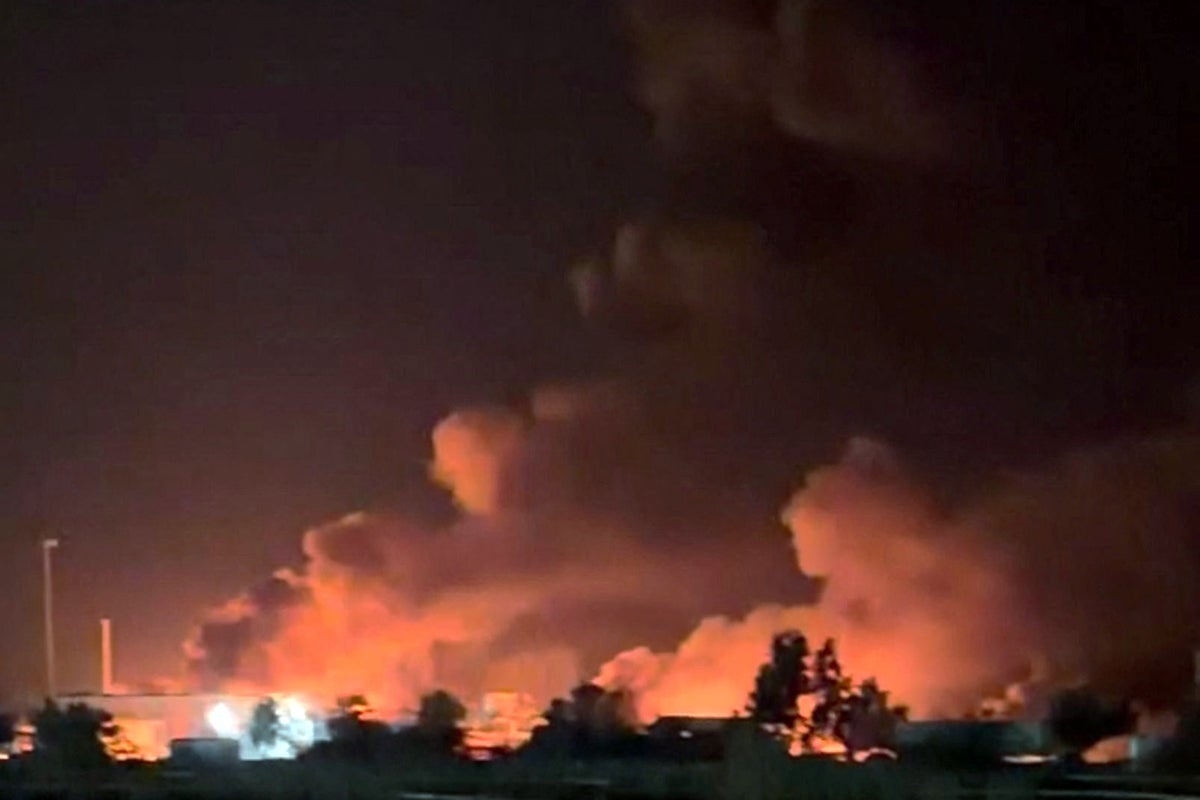
The Senate’s 50-46 procedural failure to advance the $1.15 trillion National Defense Authorization Act (NDAA) for fiscal year 2027 is not merely a routine partisan skirmish; it represents a structural crisis at the intersection of constitutional war powers, industrial-base capacity, and macroeconomic sustainability. While headlines frame the deadlock as a simple protest against the Trump administration’s unauthorized resumption of hostilites in Iran, a rigorous look reveals a deeper structural friction: a direct collision between executive war-fighting authority and congressional power of the purse.
Understanding this legislative logjam requires looking beyond the political theater. The core of the conflict lies in three distinct friction points: the breakdown of statutory war powers, a fundamental disagreement over defense spending versus non-defense capital allocation, and the severe operational bottlenecks currently plaguing the domestic defense industrial base. In related developments, take a look at: Why Global Shipping Risks Are Hitting Home in Small Town India.
The War Powers Friction Point
The immediate catalyst for the blockade was the collapse of a brief, fragile ceasefire in the Middle East and the subsequent resumption of U.S. strikes in Iran. This escalation triggered a statutory crisis involving the War Powers Resolution of 1973.
The structural breakdown of this mechanism can be modeled as a conflict between two opposing legal frameworks: Associated Press has analyzed this fascinating subject in great detail.
                  ┌────────────────────────────────────────┐
                  │      1973 War Powers Resolution        │
                  │   • Mandatory 48-hour notification     │
                  │   • 60-day cap on unauthorized force   │
                  └───────────────────┬────────────────────┘
                                      │
                                      ▼  [COLLISION]
                                      ▲
                  ┌───────────────────┴────────────────────┐
                  │      Executive Hostilities Loop        │
                  │   • Declares "termination" of conflict  │
                  │   • Resumes strikes (restarts clock)   │
                  └────────────────────────────────────────┘
Under the 1973 War Powers Resolution, the executive branch must notify Congress within 48 hours of deploying armed forces into hostilities and must terminate the engagement within 60 days unless Congress explicitly authorizes the use of military force or declares war. The Trump administration circumvented this limitation by declaring that original hostilities "terminated" in April 2026, only to notify Congress that a fresh 60-day window had commenced on July 7, 2026, following renewed strikes.
This creates a self-perpetuating executive loophole. By treating a single, continuous geopolitical conflict as a series of distinct, short-term military actions, the executive branch can theoretically wage an indefinite campaign without legislative approval.
By withholding votes on the NDAA, the legislative branch is attempting to reassert its constitutional leverage. The Senate bill contains provisions targeting executive operational flexibility, including freezing the travel funds of Secretary of War Pete Hegseth until specific reports on military operations—such as a deadly school strike at the start of the conflict—are delivered to Congress.
This legislative retaliation is a blunt instrument. Blocking the NDAA does not automatically halt the deployment of forces; it merely starves the broader military apparatus of long-term policy directives, creating a disconnect between immediate operational realities and long-term planning.
The $1.5 Trillion Macroeconomic Squeeze
The dispute over the NDAA topline is tied to a broader macroeconomic debate regarding the federal deficit and resource allocation. While the NDAA before the Senate authorizes $1.15 trillion in discretionary defense spending, the administration is concurrently seeking an additional $350 billion in mandatory funding through a fast-tracked budget reconciliation process. This would push total national defense spending to a historic $1.5 trillion.
The economic trade-off can be understood through a simple resource constraint model:
$$T = D + N$$
Where:
- $T$ is the total federal discretionary spend limit.
- $D$ is defense spending.
- $N$ is non-defense discretionary spending.
The administration’s push to increase $D$ to $1.5 trillion—a real increase of more than 28% over the fiscal year 2026 base—is occurring in a climate where domestic and social programs ($N$) are facing significant proposed cuts.
Macroeconomic Allocations (FY 2027 Requests)
┌───────────────────────────────────────────────┬──────────────────────┐
│ Funding Vehicle                               │ Amount               │
├───────────────────────────────────────────────┼──────────────────────┤
│ Senate Discretionary NDAA (FY27)              │ $1.15 Trillion       │
│ Proposed Budget Reconciliation (Mandatory)    │ $350 Billion         │
│ Total Requested Defense Topline               │ $1.50 Trillion       │
│ Pending Special Supplemental (Iran War Costs) │ $67-$87 Billion      │
└───────────────────────────────────────────────┴──────────────────────┘
The friction in Congress is not solely about the headline cost. It is a fundamental disagreement over capital allocation. Proponents of the $1.5 trillion topline argue that global instability requires a historic, generational investment to modernize the military and maintain deterrence.
Opponents argue that pouring massive capital into complex, high-cost defense platforms yields diminishing strategic returns. During recent engagements, advanced, multi-million-dollar defense platforms were routinely depleted by low-cost, mass-produced Iranian drone systems. This dynamic exposes a critical asymmetry: the cost-exchange ratio heavily favors the adversary when the United States must fire million-dollar interceptors to neutralize thousand-dollar drones.
Without a fundamental shift toward lower-cost, expendable autonomous systems, raising the defense budget to $1.5 trillion may subsidize inefficient defense programs rather than building a modern, agile force.
Defense Industrial Base Bottlenecks
While the political debate centers on funding, the physical reality is that the U.S. defense industrial base is constrained by severe capacity bottlenecks. Pouring more capital into defense procurement will not produce immediate security results if the underlying supply chain cannot scale.
The House Armed Services Committee’s version of the $1.15 trillion bill attempts to address these industrial limitations. It highlights two critical supply-chain vulnerabilities:
1. Solid Rocket Motor Production
Modern munitions, including Patriot PAC-3 interceptors, THAAD interceptors, and Tomahawk cruise missiles, rely on solid rocket motors. Historically, this sector has suffered from a single-point-of-failure risk, with a highly consolidated supplier network. The draft legislation attempts to de-risk this by establishing a solid rocket motor qualification working group and mandating that critical munitions maintain more than one qualified supplier.
2. Adversary Capital Contamination
A growing vulnerability is the presence of foreign, potentially hostile capital within domestic defense supply chains, particularly in early-stage tech and manufacturing firms. The House bill seeks to establish a dedicated office within the Office of Industrial Base Policy to review and mitigate foreign capital risks.
However, these legislative remedies face a major lag. Developing secondary suppliers for solid rocket motors requires years of capital investment, facility certification, and workforce training. In the short to medium term, any rapid increase in procurement funds will simply lead to price inflation among existing contractors rather than a net increase in physical production capacity.
The Strategic Path Forward
To break the legislative impasse and build a defense posture that matches economic and industrial realities, policymakers must transition from raw funding increases to targeted structural reforms.
- Implement a Hard Cap on Executive War Power Renewals: The Senate should condition any future progress on the NDAA on statutory amendments that close the "hostilities termination" loophole. The 60-day War Powers clock must apply to any ongoing campaign against a state actor, regardless of temporary, unilaterally declared ceasefires.
- Enforce Cost-Exchange Ratio Metrics: Future defense procurement must mandate a portfolio balance between high-cost, exquisite systems and cheap, mass-produced, expendable autonomous platforms (such as Collaborative Combat Aircraft and cheap loitering munitions). Every major procurement program should be audited on its cost-to-kill ratio against asymmetric, low-cost threats.
- Prioritize Supply Chain Resilience Over Platform Acquisition: Congress should redirect capital away from legacy projects—such as the proposed "Trump-class battleship" or outdated heavy platforms—and reallocate those funds directly toward de-bottlenecking the sub-tier supply chain. Resolving solid rocket motor manufacturing shortages and protecting the industrial base from adversarial capital must take precedence over launching new, unproven capital ships.


