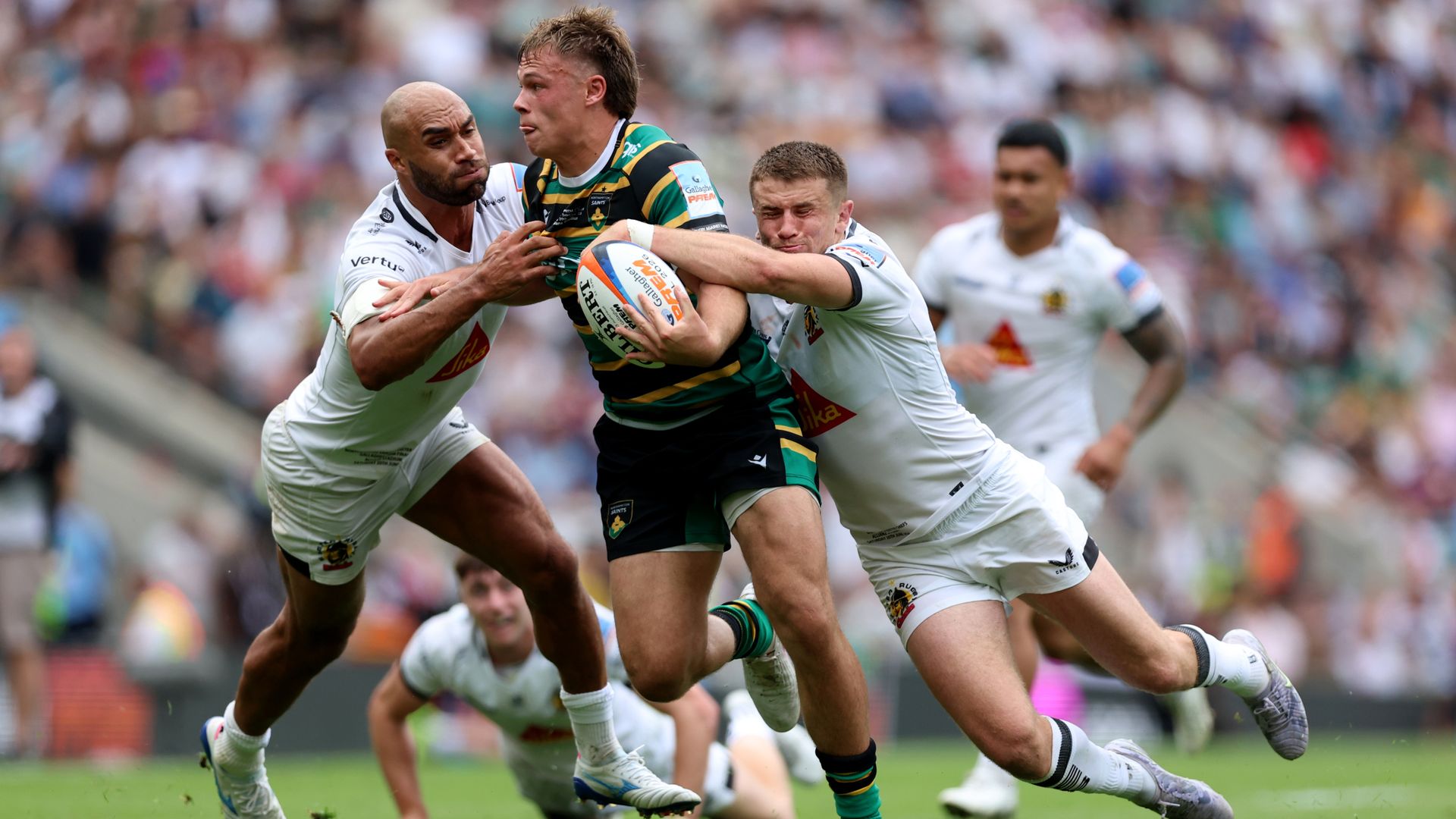
Mud clings differently to the boots of a Premiership rugby player than it does to the pristine turf of San Siro.
At Allianz Stadium or Welford Road, the smell of winter is a distinct concoction of damp wool, liniment, and thirty thousand pints of lukewarm lager poured in concourses that have not seen a lick of modern paint since the Thatcher administration. It is a sport built on granite-jawed amateurism, fiercely protective of its school tie origins, yet bleeding internally. The stadiums rumble with a ferocious, parochial loyalty. The balance sheets, however, whisper of quiet panic. Don't forget to check out our previous article on this related article.
Enter Gerry Cardinale.
If you sat across a mahogany table from the founder of RedBird Capital Partners, you might not immediately guess he holds the keys to AC Milan. He doesn't look like a traditional football baron wrapped in cashmere. He looks like a man who spent his formative years analyzing spreadsheets on the floor of a trading desk, searching for the exact decimal point where passion meets profit. To read more about the history here, CBS Sports provides an excellent breakdown.
Now, Cardinale and his private equity firm have turned their analytical gaze toward English club rugby. They are not buying a jersey patch or sponsoring a halftime crossbar challenge. They are pitching a stake in Premiership Rugby itself, eyeing the crown jewels of a competition that routinely produces breathtaking athletic warfare while simultaneously flirting with insolvency.
To understand why a private equity titan sees gold in muddy English rucks, you have to look past the televised tries and into the ledger books.
Imagine a fictional club director named Arthur. Arthur has spent twenty-five years mortgaging his weekends to keep a mid-table side afloat. He knows the weight of a damp scrum cap and the terrifying thud of an insurance renewal notice. When Arthur looks at his club's balance sheet, he sees a tragic paradox. The product on the pitch is world-class. The international television audience is growing. Yet, the business model relies heavily on eccentric multi-millionaires writing checks out of sheer vanity until they grow tired or broke.
That is the exact vulnerability RedBird exploits. They see an undervalued asset class.
For years, English rugby operated under the assumption that financial gravity did not apply to men who hit each other at twenty miles an hour. Clubs collapsed. Wasps fell into administration. Worcester Warriors vanished mid-season like a phantom ship swallowed by a heavy North Sea fog. The system was broken because it treated professional sport like a gentleman’s social club rather than a high-octane media enterprise.
RedBird’s pitch proposes a radical transfusion of American sports-business logic into the British game. This is not merely about writing a check to cover immediate debts. It is about restructuring how the sport monetizes its own violence and beauty.
Think about how modern fandom works. A teenager in Tokyo or Texas does not sit through eighty minutes of a tactical kicking duel because their grandfather went to school in Gloucester. They want highlights on TikTok. They want behind-the-scenes access. They want the narrative friction of Drive to Survive brought to the mud and blood of the English winter.
Cardinale’s blueprint relies on transforming clubs into entertainment hubs, maximizing stadium yields beyond the twenty-two matchdays a year when rugby is actually played, and leveraging global media rights through centralized control.
Purists hate it. You can hear them grumbling in the members' bars across Northampton and Bath. They talk about soul. They talk about tradition. They warn against the sterile corporate machinery of American ownership groups treating historic institutions as mere spreadsheet rows.
They have a point. Corporate homogenization can suck the oxygen out of a terrace faster than a referee’s whistle.
Yet, tradition does not pay the physio bills. Tradition does not retain world-class centers and wingers when French Top 14 clubs are dangling tax-advantaged euros that dwarf English salary caps. Without fresh capital, the Premiership risks becoming a feeder league for richer shores, a brilliant museum of a sport slowly decaying from the inside out.
The negotiation room is tense. Premiership Rugby stakeholders are notoriously fractious, a collection of proud owners who rarely agree on the color of the grass, let alone long-term governance. Bringing them into alignment requires a specific kind of commercial diplomacy. It requires convincing men whose egos are as large as their bank accounts that losing control of a piece of the pie is better than owning the whole pie when the bakery burns down.
If RedBird succeeds, the landscape of English sport shifts permanently. It proves that private equity has found a new frontier in heritage sports, converting old-world grit into scalable, venture-backed media properties.
Consider what happens next: better broadcast production, expanded international markets, state-of-the-art training facilities, and perhaps, financial stability for players who currently risk their brains and bodies for wages that pale in comparison to their peers in the NFL or Premier League.
The mud will still cling to the boots. The roar from the terraces will still shake the corrugated iron roofs. But beneath the surface, the engine will be humming with Wall Street precision.
In the dim light of an empty stadium, long after the final whistle has blown and the last pint has been cleared from the concrete concourse, the ghosts of the old amateurs watch closely from the stands. They know the game belongs to the future now. And the future wears a tailored suit, holding a ledger, ready to rewrite the rules of the scrum.