Elections Alberta just dropped a bombshell that proves standard petition threshold math doesn't automatically buy you a ticket out of Confederation.
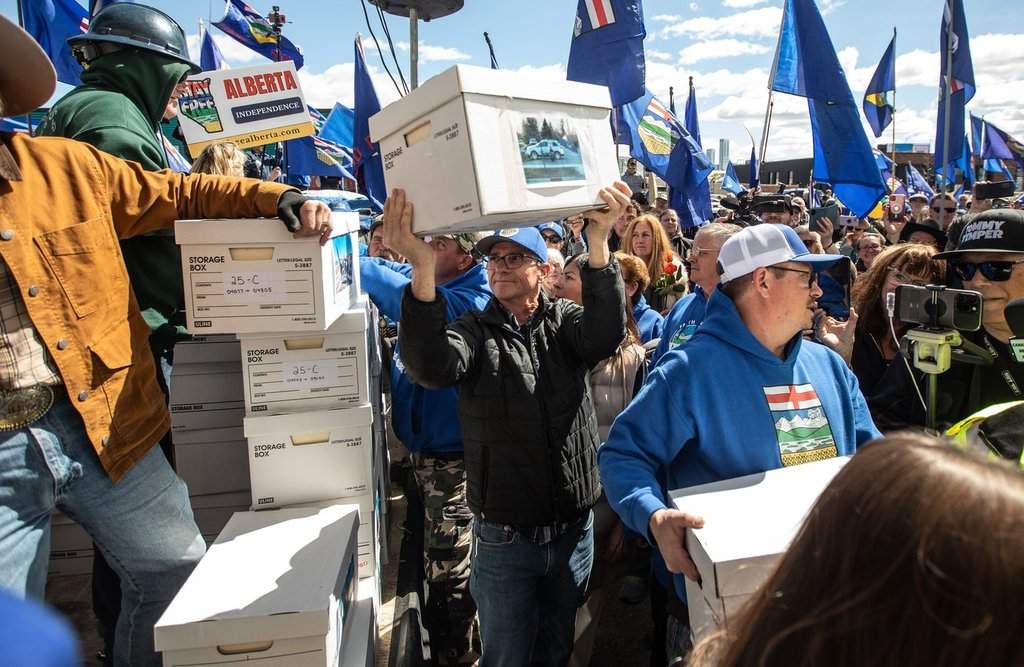
On July 24, 2026, the province's non-partisan electoral agency confirmed that the "Stay Free Alberta" citizen initiative petition collected more than enough verified signatures to trigger a referendum on Alberta independence. Out of nearly 280,000 physical submissions, statistical sampling confirmed 222,597 valid signatures—easily clearing the legally required bar of 177,732.
Yet, the petition remains totally frozen.
If you're wondering why a legally validated petition can't actually move forward to a vote, you aren't alone. The standoff exposes the massive gap between collecting names at a folding table and navigating the high-stakes world of constitutional law and Treaty rights.
The Math Worked, But the Law Intervened
Organizer Mitch Sylvestre and the Stay Free Alberta group submitted boxes containing over 300,000 signatures to provincial authorities. Elections Alberta spent weeks checking addresses, verifying eligibility declarations, and ensuring canvassers followed strict protocols. They even screened for leaked voter data, finding zero instances of illegitimate signatures.
On paper, they won. In practice, Chief Electoral Officer Gordon McClure had to hit the brakes.
Why? Because back in May 2026, Court of King's Bench Justice Shaina Leonard quashed the petition entirely. The court ruled that approving the initiative failed to account for earlier legal precedents protecting Indigenous Treaty rights. Four major First Nations—Athabasca Chipewyan, Blood Tribe, Piikani, and Siksika—challenged the petition, arguing that Alberta attempting to sever ties with Canada directly infringes on sacred Crown-Indigenous treaties.
A secondary ruling allowed signature verification to proceed so the numbers would be ready if the appeal succeeded. But verified or not, the initiative stays on ice until the Court of Appeal of Alberta delivers a final ruling.
Why Treaty Rights Stop Secession Hot In Its Tracks
Plenty of organizers thought collecting 10 percent of provincial voters would make a referendum inevitable. That line of thinking completely overlooks how Canadian federalism operates.
Provinces don't exist in a vacuum. The land that makes up Alberta is covered by Treaties 6, 7, and 8. These are solemn, constitutional agreements signed between sovereign First Nations and the British Crown—not the provincial government in Edmonton.
When First Nations leaders took the province to court, their legal argument was straightforward: a provincial petition cannot unilaterally redefine or dissolve agreements made with the federal Crown. Justice Leonard agreed that the Crown failed in its constitutional duty to consult First Nations before launching a process that could alter their fundamental rights.
"You can't use a provincial citizen's initiative to vote away constitutional treaties that predate the province itself."
That isn't just a minor hurdle. It's a massive legal brick wall.
The Premier's Parallel Strategy
This judicial deadlock puts Premier Danielle Smith in a tricky political position. With pressure mounting from her conservative base and the Stay Free Alberta camp, Smith scrambled to maintain control of the narrative.
Her response was to schedule a government-led referendum for October 19, 2026. Instead of a direct, binding vote on breaking away, the province's ballot asks a much broader question: whether Albertans want to stay in Canada or trigger a secondary, non-binding negotiation process.
Separatist organizers aren't happy. Jeff Rath, legal counsel for the petition campaign, publicly demanded that the premier pull her question from the ballot and make room for their initiative. But Smith maintains her hands are tied by the King's Bench ruling, leaving the October vote as her administration's only legal workaround.
What Happens Right Now
If you are tracking where this goes next, keep your eyes on the court docket, not the petition counters. Here is the reality of the situation:
- The Appeal Court holds all the cards: Until the Court of Appeal of Alberta weighs in on whether the Crown had a duty to consult First Nations, no provincial official can legally put the Stay Free Alberta question on a ballot.
- Federal law still applies: Even if the petition somehow clears the appellate hurdle, Canada's federal Clarity Act and Supreme Court precedents require clear questions and negotiations, meaning a simple provincial petition cannot legally trigger an immediate split.
- October 19 remains the main event: Barring a sudden, fast-tracked ruling from the highest provincial court, Albertans will vote on the government's broad constitutional referendum questions this fall, while the grassroots separatist petition remains locked in legal chambers.
If you want to understand Alberta's constitutional future, stop focusing solely on signature tallies and start reading up on section 35 Treaty rights, because that's where this battle will ultimately be decided.