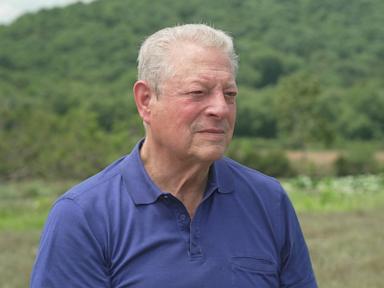
Twenty years ago, a former vice president walked onto a stage with a massive slideshow and changed how the world looked at our planet. When Al Gore released An Inconvenient Truth in 2006, critics called him an alarmist. Skeptics mocked the famous scissor-lift scene where he rose high into the air to illustrate the terrifying trajectory of carbon dioxide emissions. Today, those same critics look incredibly foolish.
Al Gore recently made a blunt declaration, stating that scientists were dead right about the climate crisis. He isn't taking a victory lap. Nobody wins a prize for predicting the destruction of ecosystems and communities. Instead, his reflection serves as a stark reminder that we had the data, we had the warnings, and we chose to drag our feet anyway.
If you look at the hard data collected over the last two decades, the predictions from that 2006 documentary didn't just come true. In many cases, they underestimated the speed of the crisis. We aren't talking about abstract theories anymore. You can see the consequences outside your window right now.
Two Decades of Climate Warnings Realized
When the film first debuted, main detractors focused heavily on the timeline. They argued that the catastrophic weather events, rising sea levels, and melting glaciers Gore warned about were centuries away. They were wrong.
Let's look at global temperatures. The years following the movie's release have consistently shattered records. The World Meteorological Organization repeatedly confirms that the last decade has been the warmest in recorded human history. We aren't just edging past old records by fractions of a degree. We are blowing past them.
Extreme weather has turned into a seasonal routine. Gore talked about stronger storms fueled by warmer ocean waters. Look at the intense hurricanes that regularly batter the Gulf Coast, or the unprecedented flooding events that submerge entire cities in Europe and Asia. The atmosphere holds about seven percent more moisture for every one degree Celsius of warming. That means when it rains, it dumps.
Droughts tell the same story. The American West has endured a megadrought worse than anything seen in centuries. Reservoirs like Lake Mead and Lake Powell hit historic lows, threatening water supplies for millions of people. Forest fires aren't just bigger now. They create their own weather systems. The smoke from these blazes regularly blankets entire continents, turning skies orange thousands of miles away from the flames.
The Data Behind the Warnings
Critics loved to attack the specific graphics used in the documentary. They claimed the animation showing Florida under water was sensationalist junk science. But if you talk to municipal engineers in Miami today, they will tell you a different story.
Sunny day flooding is now a regular headache for coastal cities. High tides push seawater up through the drainage systems, flooding streets even when there isn't a cloud in the sky. Cities are spending billions of dollars installing massive pumps and raising roads just to keep the ocean out of people's living rooms.
The polar ice sheets are reacting exactly how scientists feared. Satellite data from NASA shows that Antarctica and Greenland are losing billions of tons of ice mass every single year. This isn't a slow, linear melt. It is accelerating. The loss of this ice does two things. It raises sea levels globally, and it removes the planet's white reflective shield. Instead of bouncing sunlight back into space, the dark open ocean absorbs that heat, making the planet warm up even faster.
The ocean itself is absorbing the vast majority of our excess heat. Coral reefs are the ultimate warning system here. Mass bleaching events used to happen once in a generation. Now they happen almost every year, turning vibrant underwater cities into ghost towns of white calcium carbonate.
Where the Critics Got It Wrong
The biggest mistake the skeptics made was assuming the earth is a simple machine. They thought if you turn up the heat a little bit, things just get a little warmer. They completely missed the concept of feedback loops.
A feedback loop is when a change triggers a reaction that worsens the original change. Take the permafrost in Siberia and northern Canada. This frozen ground locks away massive amounts of ancient methane and carbon. As the planet warms, the permafrost melts. The melting ground releases that trapped gas into the air. Methane traps far more heat than carbon dioxide in the short term. The atmosphere gets hotter, melting more permafrost.
Gore tried to explain these complex ideas to a mass audience using simple metaphors. His critics spent years hyper-focusing on minor editorial choices rather than engaging with the core physics. They wanted to argue about political optics because they couldn't win the argument against the laws of thermodynamics.
The corporate pushback was relentless too. Major fossil fuel companies spent hundreds of millions of dollars on public relations campaigns designed to muddy the waters. They copied the old tobacco industry playbook. They didn't need to disprove the science. They just needed to make the public think the science wasn't settled yet.
What We Must Do Right Now
We can't change the past twenty years. The carbon we dumped into the air during that time is locked in, and we will be dealing with its effects for decades. But we can absolutely control what happens next. The transition away from fossil fuels is no longer a fringe environmental dream. It is a economic necessity.
Clean energy has matured immensely since Gore first dragged his projector onto that stage. Solar and wind power are now the cheapest forms of new electricity generation in most of the world. It is simply cheaper to build a giant solar array than it is to build a new coal or gas plant.
The shift to electric transportation is already happening, though not fast enough. Car manufacturers are investing their entire budgets into battery electric vehicles because they see where the market is going. The technology works, the prices are falling, and the performance is better.
But individual choices aren't going to solve this on their own. Buying a reusable shopping bag or turning off your lights when you leave a room is great, but it doesn't shift the global energy mix. We need massive systemic changes.
First, governments have to stop subsidizing fossil fuels. Every year, trillions of dollars in public funds flow into oil and gas production, artificially lowering their cost and delaying the adoption of cleaner alternatives. Tax dollars should not fund the destruction of our climate stability.
Second, we have to rebuild our electrical grids. The current grid infrastructure was built for a handful of centralized coal plants. We need an integrated grid that can handle millions of distributed energy sources like rooftop solar panels and wind farms spread across thousands of miles.
Finally, you need to hold leaders accountable with your vote and your wallet. Stop supporting politicians who pretend the crisis isn't real. Stop giving your money to corporations that fund climate denialism. The scientists were right twenty years ago, and they are right today. We have the tools to fix this, but we are rapidly running out of time to use them.