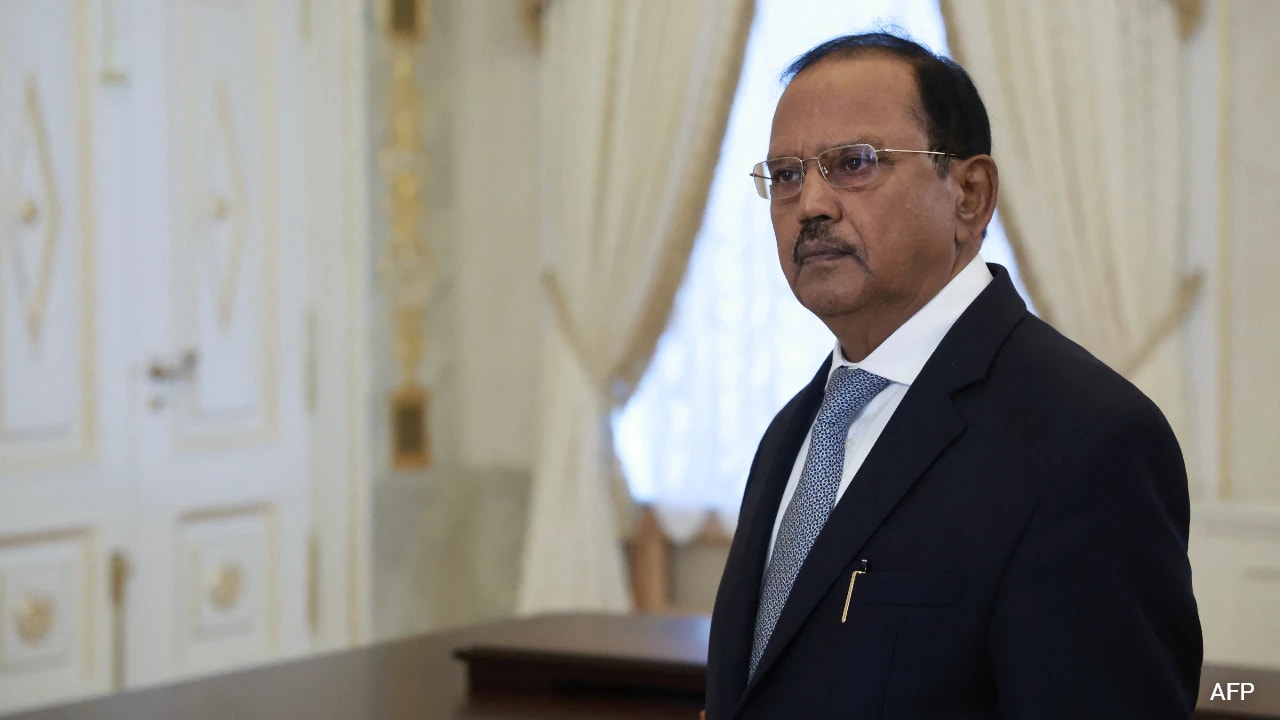
National Security Advisor Ajit Doval is back in Beijing. It's a trip that happens away from the media spotlight most of the year, but this time feels different. He's sitting down with Chinese Foreign Minister Wang Yi for the 25th round of Special Representatives talks on the India-China boundary dispute.
If you think this is just another diplomatic handshake, you're missing the bigger picture. Ties between New Delhi and Beijing hit rock bottom following the 2020 Galwan Valley clash. Since Prime Minister Narendra Modi and President Xi Jinping met in Kazan, Russia, back in late 2024, both capitals have tried to claw their way back to a working relationship. Doval's current mission in Beijing isn't just about drawing lines on a map. It's about setting the stage for high-stakes leadership summits ahead.
The Timing Tells the Real Story
Why right now? Look at the calendar. Chinese President Xi Jinping is expected to travel to New Delhi next month for the BRICS Summit. Before that handshake happens in front of global cameras, the groundwork has to be laid.
External Affairs Minister S. Jaishankar didn't mince words recently. He pointed out that peace and tranquillity along the 3,488-kilometer frontier are non-negotiable prerequisites. You can't pretend trade and diplomacy are booming when troops are staring each other down across the Line of Actual Control (LAC).
Doval and Wang know this dynamic intimately. As designated Special Representatives—a mechanism first born in 2003—their job is to manage what diplomacy alone cannot instantly fix. They aren't going to solve a decades-old territorial disagreement over a two-day itinerary. But they can establish guardrails that keep friction from boiling over into active conflict.
What's Actually on the Table
Border management is the core agenda item. Following previous discussions under the Working Mechanism for Consultation and Coordination on China-India Border Affairs (WMCC), both sides have talked about early harvest models in boundary delimitation.
India continues to maintain a firm stance on its sovereignty, especially regarding regions like Arunachal Pradesh, rejecting any external naming conventions or territorial claims outright. At the same time, economic realities demand a functional dialogue. Both nations recognize that a predictable frontier is necessary for regional stability.
Doval's schedule also includes a call on Chinese Vice President Han Zheng. This signals that Beijing views his visit with high-level diplomatic weight, moving past routine bureaucratic channels straight into political leadership engagement.
Keep an eye on the outcomes emerging from these closed-door sessions. If Doval and Wang successfully secure concrete de-escalation protocols, the upcoming summit meetings won't just be symbolic. They might actually mark a durable turning point for two of Asia's heaviest hitters.