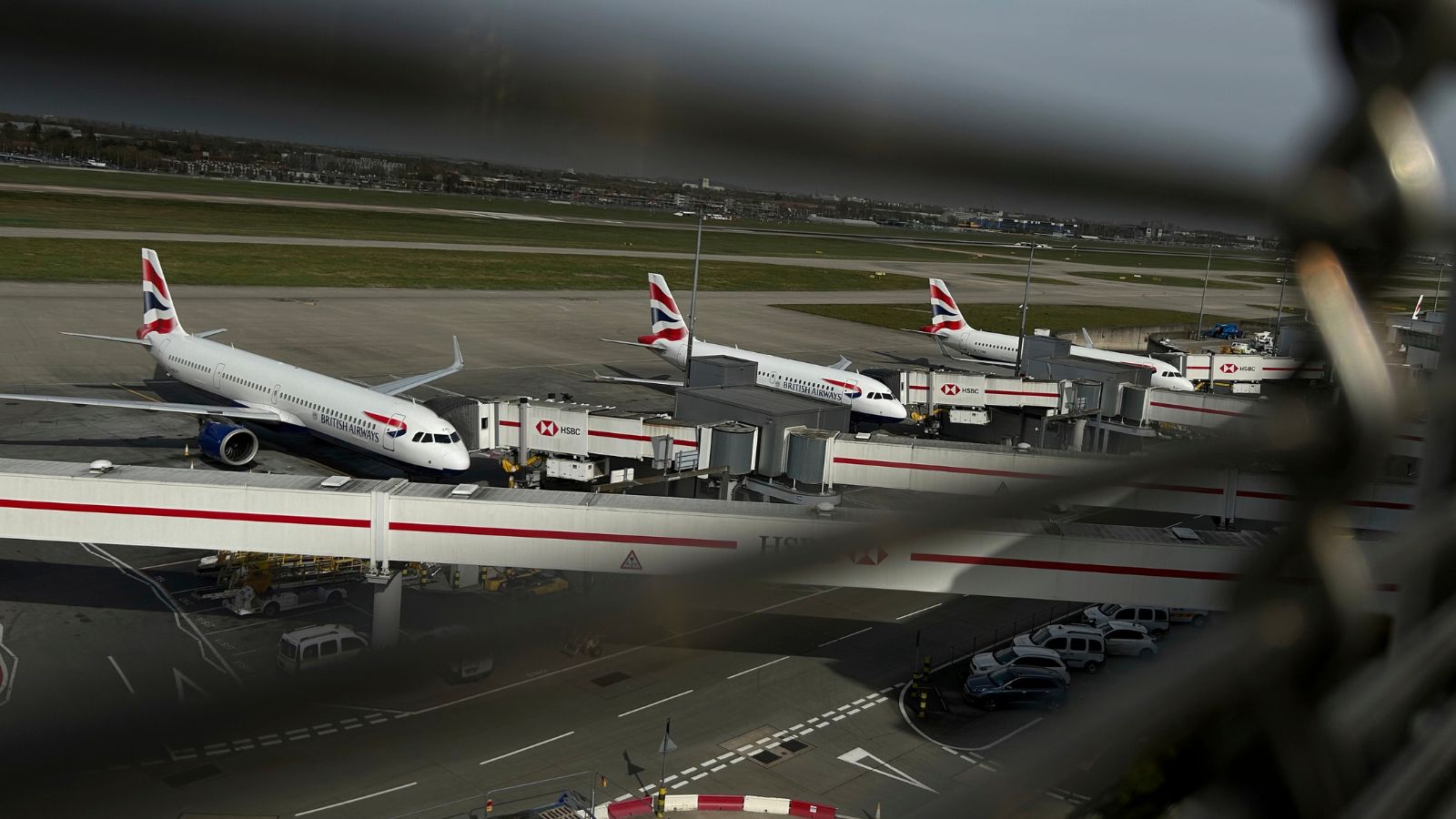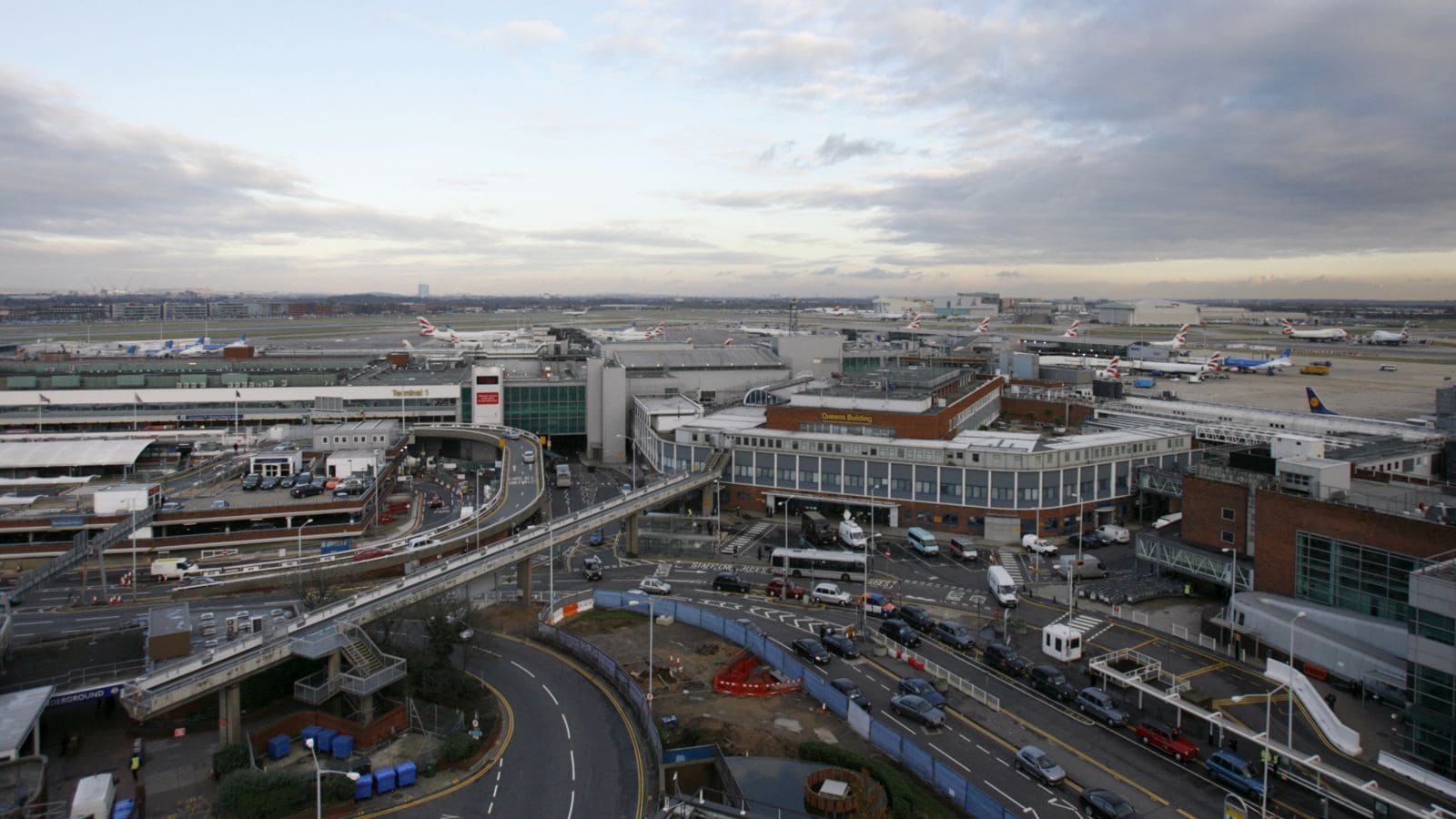
The coffee in the paper cup was already lukewarm, tasting faintly of cardboard and bitter compromise. Outside the floor-to-ceiling windows of Terminal 5, the gray London drizzle smeared against the glass, turning the tarmac into a blurry watercolor of amber landing lights and wet concrete.
Sarah checked her watch again. 14:42.
Her flight to Edinburgh was supposed to push back ten minutes ago. On the overhead departure board, the red text flickered. A single, heavy word blinked into existence across a dozen different rows, replacing destinations like Dublin, Frankfurt, and Zurich with a cold, absolute suspension.
Delayed.
At first, nobody panicked. Modern air travel is an exercise in managed friction; delays are the weather tax we pay for crossing continents in hours instead of weeks. People sighed, shifted their weight from one tired foot to the other, and dug into their backpacks for phone chargers. But then the announcements began. Not the crisp, practiced drone of a gate agent smoothing over a late-arriving aircraft, but something hesitant. A manager’s voice, tight around the edges, speaking through a microphone that crackled with static.
A technical issue.
Those four syllables are the modern equivalent of a foghorn in a dark harbor. They mean something has broken in the invisible architecture of the sky, and no one quite knows how to fix it.
To understand what happened that afternoon, you have to look past the aluminum tubes sitting quietly on the tarmac and look up into the invisible grid. Most passengers imagine air traffic control as a stressed person in a dark room staring at a green radar sweep, shouting headings into a headset like an action movie hero. The reality is far more fragile and infinitely more sophisticated. It is a vast, continental nervous system built on a fragile truce between human intuition and ancient software, stitching millions of individual vectors together across a crowded island.
On that day, the nervous system froze.
A nationwide technical fault cascaded through the National Air Traffic Services systems. It was not a grand cyberattack from a Hollywood antagonist, nor was it a dramatic power failure that plunged radar screens into literal darkness. It was something much more terrifying in its mundane complexity: a data processing error. The flight plans—the digital DNA of every movement in British airspace—refused to validate.
Imagine trying to direct a ballet where the dancers know their steps, but the sheet music has suddenly transformed into ancient Greek. You cannot let them move. To move is to risk catastrophe.
So, the system did what any self-preserving machine does when it loses its mind. It slammed the brakes.
Back in the terminal, the human cost of that digital stutter began to pool on the linoleum. Sarah watched a young father try to entertain a toddler whose patience had expired precisely three hours ago. Across the concourse, a businessman in a charcoal suit stood frozen in front of a dead arrivals board, his phone pressed to his ear, listening to the eternal, soul-crushing beep of a dropped international call.
We forget how dependent we are on the frictionless hum of the background. We board a metal cylinder, trust our lives to strangers we will never see, and expect to materialize three hundred miles away in time for dinner. When that illusion snaps, the shock is visceral.
The pilots felt it first in the flight decks. Captain Marcus sat in the left seat of an Airbus A320 idling on a remote taxiway, waiting for clearance that wasn't coming. Through his windshield, the runway stretched out empty, devoid of arrivals, a highway to nowhere.
"We've lost our automated flight plan feed," his first officer said, voice unnervingly quiet.
Marcus didn't need to check his instruments. He could feel the stillness in the aircraft's systems. In the old days, air traffic control relied purely on voice radio—the scratchy chatter of pilots calling out positions, altitudes, and intentions. Today, that voice work is just the safety net. The real work is electronic, a silent conversation of transponders, flight management computers, and predictive tracking algorithms that map the sky hours in advance.
When those systems failed, controllers had to revert to manual processing. They had to pick up telephones. They had to write flight paths on paper strips by hand.
Paper. In the twenty-first century.
The irony is staggering. We live in an era obsessed with artificial intelligence, cloud infrastructure, and autonomous mobility, yet our global transit network rests on a fragile scaffolding of legacy code and human vigilance. When the automation stumbles, civilization crawls back to the pencil.
For hours, the airspace over the United Kingdom functioned like a clogged artery. Flights already airborne were allowed to land—the sky above is vast enough to hold what is already moving, provided everyone maintains their altitude and separation. But departures ceased entirely. Planes sat on tarmacs from Heathrow to Aberdeen, turning into expensive, stationary hotel rooms. Passengers were trapped not by distance, but by data.
Outside, the rain kept falling. Inside, the terminal air grew stale, thick with the scent of anxiety, spilled coffee, and the low, collective hum of thousands of people collectively abandoning their plans.
What makes an event like this linger in the memory isn't the statistical inconvenience—though thousands of cancelled flights and millions in economic losses certainly leave a mark. It is the sudden confrontation with our own vulnerability. We have built an extraordinarily complex world, one where a corrupted line of code in an obscure server room can immobilize an entire nation's mobility within minutes.
By evening, the engineers found the corrupted data. They isolated it, flushed the cache, and rebooted the system with the meticulous, heart-in-throat caution of bomb disposal technicians snipping wires. Slowly, agonizingly, the green blips returned to the screens. The paper strips were pushed aside. The automated voice loops started humming again.
Sarah’s flight eventually took off six hours late. As the jet lifted off the wet tarmac, breaking through the low-hanging London clouds into the sharp, golden glare of the setting sun, the world below looked serene, orderly, and entirely normal.
The lights of the city twinkled through the haze, indifferent to the chaos that had rippled through them hours before. But looking out the tiny oval window at the empty, beautiful expanse of the upper atmosphere, the realization settles in. We are suspended over an abyss of our own making, trusting our weight to a gossamer web of technology that we rarely see, and almost never appreciate, until the moment it quietly snaps.