European steelmakers have been screaming about unfair competition for years, and Brussels finally pulled the trigger. By slapping anti-dumping duties on cold-rolled steel imports from India, Japan, Taiwan, Türkiye, and Vietnam, the European Commission just redrew the map for anyone buying, selling, or manufacturing flat steel products in Europe.
If you're in supply chain management or procurement, you already feel the headache. Prices are shifting. Contracts are getting messy. And honestly, most of the surface-level news coverage completely misses what happens next on the factory floor.
I've watched European trade defense mechanisms play out across multiple industrial cycles, and they rarely work the way politicians claim they will. You don't just flip a tariff switch and magically revive domestic blast furnaces overnight. Instead, you create immediate margin compression for downstream manufacturers who suddenly have to scramble for alternative mills while their competitors outside the bloc buy cheap Asian steel without penalty.
Why Brussels Targeted These Five Countries Right Now
The European Steel Association, known as EUROFER, didn't just wake up angry. They spent months compiling massive dossiers showing that producers in India, Japan, Taiwan, Türkiye, and Vietnam were offloading cold-rolled flat steel into the EU at prices well below their normal domestic value.
In trade law, that's classic dumping. When global demand softens—especially in massive markets like China—excess steel has to go somewhere. Europe has traditionally been an open, lucrative dumping ground because its internal prices tend to sit higher than global averages.
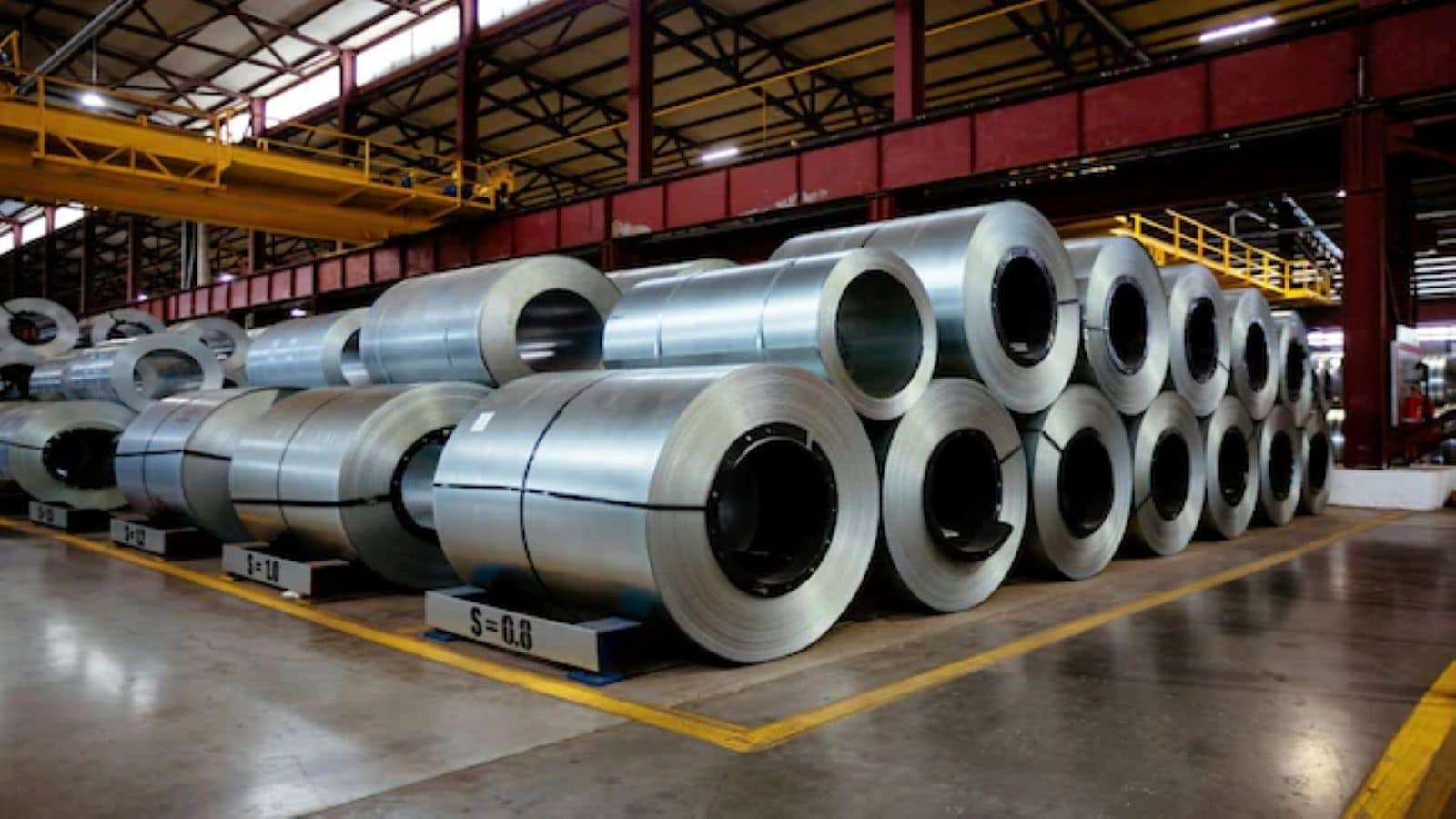
When imports surge at rock-bottom prices, European mills like ArcelorMittal, Thyssenkrupp, and Tata Steel Europe can't compete without bleeding cash. Cold-rolled steel isn't some niche raw material either. It's the backbone of automotive body panels, household appliances, construction framing, and precision engineering. If European mills lose their grip on cold-rolled flat products, their entire upstream operation starts to wobble.
The European Commission's trade defense investigators looked at injury margins and dumping margins across a specific investigation period. They found clear evidence of price undercutting. That's why five major exporting nations ended up in the crosshairs simultaneously, rather than picking them off one by one.
Breaking Down the Tariffs and Who Gets Hit Hardest
Not every exporter gets treated the same way under EU trade rules. Brussels calculates individual duty rates based on how much a specific producer cooperated with the investigation and how severely they underpriced their goods.
Companies that opened their books to EU investigators usually land lower residual or individual rates. Those that stonewalled the process get hit with punitive country-wide maximums.
Take Vietnam and India. Both countries have rapidly expanded their flat-rolling capacity over the last decade, aiming squarely at export markets. When you combine aggressive capacity expansion with lower energy and labor costs, European mills simply can't match their landed prices in Rotterdam or Antwerp.
Japan and Taiwan sit in a slightly different boat. They aren't typically viewed as low-cost volume dumpers in the traditional sense. Their mills produce high-grade, specialized cold-rolled coils, often tailored for automotive and electronics supply chains. Getting caught in this net stings differently because European buyers often rely on Japanese and Taiwanese steel for strict metallurgical tolerances that aren't always easy to source locally on short notice.
Then there's Türkiye. Turkish mills enjoy geographic proximity to Southern Europe and existing trade agreements that normally smooth over friction. Being lumped into a multi-country anti-dumping action signals that Brussels isn't letting regional proximity shield exporters when dumping margins cross the legal threshold.
The Hidden Ripple Effect on European Manufacturers
Politicians love framing anti-dumping duties as a pure win for European workers. That's only half the story.
Every time Brussels protects upstream steel producers, it indirectly taxes downstream manufacturers. Think about a mid-sized stamping plant in Germany or an appliance maker in Italy. Their raw material costs just jumped overnight. If they were importing cold-rolled coil from Vietnam or Türkiye to keep their margins alive, that option just got significantly more expensive.
Can they just switch to a European mill? Sure, in theory. In practice, European mills know their foreign competition just got kneecapped. They immediately gain pricing power and start pushing domestic base prices higher.
Meanwhile, a competitor manufacturing washing machines or auto parts in Morocco, Serbia, or the UK can still buy that exact same cheap cold-rolled steel from India or Vietnam without paying EU anti-dumping duties. They can then ship the finished goods straight into the European Union tariff-free.
I've seen this exact scenario play out during previous EU safeguard and anti-dumping waves. You protect the steelmaker, and you accidentally hollow out the stamping and fabrication shops three steps down the supply chain. It's a classic trade policy trade-off, and procurement teams get caught right in the middle of the crossfire.
How Anti-Dumping Duties Actually Work at Customs
If you haven't dealt with EU trade defense measures firsthand, the mechanics at the border can catch you completely off guard. These duties aren't simple flat fees like a standard customs tariff.
First, Brussels often imposes provisional anti-dumping duties while the final investigation wraps up. Importers have to provide a financial guarantee—usually a bank guarantee or cash deposit—to cover the duty amount before customs clears the cargo. Once the Commission publishes the definitive regulation in the Official Journal of the European Union, those duties become permanent, typically for a five-year period.
Second, pay close attention to CN codes. Combined Nomenclature codes dictate whether your specific steel product falls inside or outside the scope of the order. Cold-rolled flat products cover a specific range of thicknesses, widths, and surface treatments. Sometimes, a slight variation in alloy content or coating moves a product out of the scope, though customs authorities aggressively police misclassification.
Third, don't assume you can just route the steel through a third country to wash the origin. The EU runs strict anti-circumvention investigations. If a trader ships Vietnamese cold-rolled coil to Malaysia, does minor processing, and re-exports it to Spain, Brussels will eventually trace the mill test certificates and slap retroactive duties on the entire trade route.
What Smart Procurement Teams Are Doing Right Now
Waiting around to see where spot prices settle is a terrible strategy when trade barriers go up. The buyers who survive tariff shocks without blowing up their budgets make aggressive moves early.
Start by auditing your entire bill of materials for cold-rolled steel exposure. Don't just look at direct coil purchases. Check your tier-one and tier-two sub-suppliers. If your stamping vendor in Poland buys their coil from an Indian trader, their price increases are coming for your budget next quarter whether you're ready or not.
Next, check your incoterms on active contracts. If you're buying on DDP (Delivered Duty Paid) terms, the seller eats the unexpected anti-dumping duty on goods currently in transit. If you signed contracts on CIF (Cost, Insurance, and Freight) or FOB (Free on Board) terms, you are the importer of record. That customs bill lands directly on your desk the moment the vessel docks.
Look closely at alternative origins that weren't named in this specific investigation. South Korea, Brazil, or domestic European service centers holding pre-duty stock might offer temporary relief, though you'll need to watch EU safeguard quotas closely so you don't run into separate tariff-rate quota walls at the end of a quarter.
Review your force majeure and change-in-law clauses immediately. Most standard commercial contracts treat government-imposed anti-dumping duties as a foreseeable business risk rather than an excusable force majeure event. If you need to renegotiate pricing with your own customers to pass along higher steel costs, start pulling the official EU regulatory notices together now so you have hard documentation to back up your price adjustments.