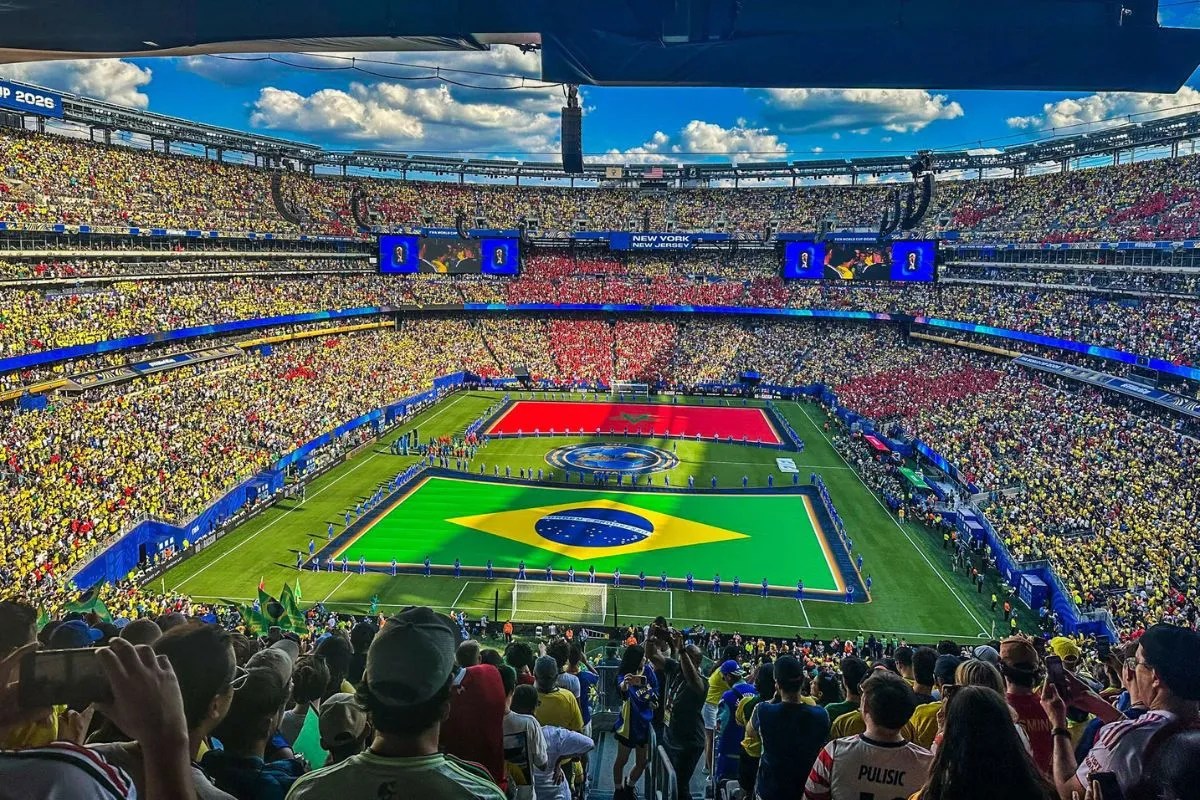
Football does not care about your metrics. It has an cold, mathematical indifference to a nation's gross domestic product, its sprawling training facilities, or the fact that its entire population could sit comfortably inside a handful of European stadiums.
Curaçao has 150,000 people. Ecuador has nearly 18 million. When the two teams walked onto the pitch at Kansas City Stadium, the math felt offensive. A sea of yellow jerseys had swallowed the arena, transforming a Midwestern NFL stronghold into a roaring embassy of South American noise. On paper, this was not a match. It was a scheduled execution. If you enjoyed this article, you might want to check out: this related article.
Just days earlier, Germany had torn Curaçao apart in a brutal 7-1 blowout. It was the kind of loss that makes casual observers pity a debutant nation. It was the kind of scoreline that whispers to small islands that they do not belong on the grass with giants.
But sitting on the bench was a 78-year-old Dutchman named Dick Advocaat. He is a man who has seen everything football can offer, yet spent the moments before his team’s matches swallowing back tears. For another angle on this event, see the latest coverage from Bleacher Report.
Two years ago, this national team barely existed. Advocaat took a job where players initially had to pay for their own flights. He inherited a scattered group of athletes, many born in the Netherlands but carrying the blood of this tiny Caribbean island. He made them memorize the national anthem, Himno di Korsou, line by line. He forced them to learn who they were playing for.
Consider what happened next: ninety minutes of pure, unadulterated defiance.
Ecuador launched an assault. They took 27 shots. They passed, sliced, and bullied their way through the Curaçao midfield with the arrogance of a team that knew they possessed 63% of the ball. Enner Valencia broke through almost immediately. Moises Caicedo fired rockets from the edge of the area. Gonzalo Plata cursed the wind as his efforts flew toward the net.
Then there was Eloy Room.
Curaçao’s 37-year-old goalkeeper did not just play a match; he staged a one-man rebellion against reality. Room threw his body into the path of 15 shots on target. Ten of those saves came from inside his own penalty box, a chaotic zone where human reaction time usually fails. It was a display of goaltending so absurd that it fell just one save short of Tim Howard's legendary all-time World Cup record.
Every time Ecuador celebrated a fraction of a second too early, Room’s fingertips intervened. The crossbar rattled. The defenders threw their bodies into oncoming boots.
Curaçao offered almost nothing in possession. They survived on 25% of the ball. They spent the entire second half suffocating under a relentless wave of yellow shirts.
But the scoreboard remained a stubborn, beautiful pair of zeros.
When the final whistle cut through the tension, the contrasting reactions told the story of how context changes everything. The Ecuadorians slumped to the grass, their World Cup hopes suddenly left on life support, weeping over what they could not convert.
And Dick Advocaat? The oldest coach in the history of the World Cup let the tears flow openly.
A few months ago, he had stepped away from this very team because his daughter’s health was failing. He had walked away because family matters more than a ball rolling across a field. When her condition stabilized, he returned to the helm, completing a personal circle that mirrored the impossible journey of his players.
This 0-0 draw was not a masterpiece of tactical brilliance. It was an exercise in survival. It was a point earned by a country that, until very recently, lacked the basic infrastructure to host a proper training camp.
Curaçao did not win the match. They won something far more elusive. They proved that a border drawn around 150,000 souls can contain enough heart to stop an empire.