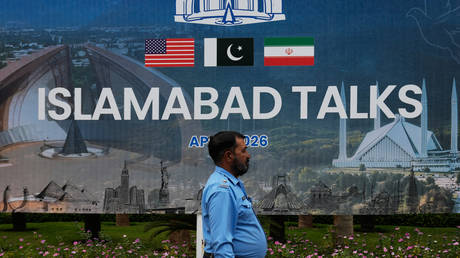
The United States has reportedly agreed to unfreeze approximately $6 billion in Iranian assets currently held in Qatari bank accounts, signaling a desperate pivot to stabilize global energy markets. While Tehran officials describe the move as a "gesture of goodwill" and a sign of Washington's seriousness in the Islamabad peace talks, the reality is far more transactional. The release of these funds is explicitly tied to a singular, high-stakes demand: the guaranteed safe passage of maritime traffic through the Strait of Hormuz.
For weeks, the strait has been a choke point of global anxiety. Iran has effectively used its geographical proximity to the waterway as a blunt instrument of diplomacy, threatening to paralyze the flow of nearly 20% of the world's liquid petroleum. By dangling the $6 billion carrot—money that has been stuck in a purgatory of sanctions and counter-sanctions since 2018—the U.S. is attempting to buy a ceasefire in a maritime war it cannot afford to fight.
The Resurrection of the Qatar Accounts
The money in question has a convoluted history that exposes the fragility of international financial agreements. These funds, primarily proceeds from Iranian oil sales to South Korea, were initially moved to Qatar in September 2023 as part of a high-profile prisoner swap. However, the accounts were effectively re-frozen by the U.S. Treasury following the October 7 attacks on Israel, under the logic that Iran's support for regional proxies invalidated previous humanitarian carve-outs.
The sudden willingness to revisit this deal suggests that the "humanitarian-only" restriction is becoming a secondary concern to the price of Brent Crude. In the current negotiation framework in Islamabad, involving Vice President JD Vance and Iranian Foreign Minister Abbas Araghchi, the funds are no longer just a ledger entry; they are the price of admission for a broader regional de-escalation.
The U.S. maintains a public stance of denial. White House spokesperson Karoline Leavitt characterized Iran's broader 10-point proposal—which includes demands for war damages and recognition of enrichment rights—as "trash." Yet, the persistent reports from senior Iranian sources to outlets like Reuters indicate that behind the scenes, the financial plumbing is already being primed.
Maritime Blackmail or Economic Diplomacy?
Tehran’s strategy is transparent. By linking the $6 billion to the Strait of Hormuz, they have successfully commodified the security of global shipping lanes. If the U.S. releases the funds, it sets a precedent that maritime disruption is a profitable venture for sanctioned nations. If they refuse, the risk of a total blockade remains, which would send shockwaves through an already volatile global economy.
There is a deep-seated mistrust on both sides. Araghchi has been vocal about Tehran’s "complete mistrust" of Washington, viewing the asset release not as a gift, but as a long-overdue debt. From the American perspective, the challenge is ensuring that these funds are actually spent on food and medicine rather than fueling the very regional conflicts the Islamabad talks seek to end.
The Islamabad Lever
The choice of Islamabad as a venue is significant. Pakistan has managed to maintain a delicate balance between its neighbor, Iran, and its security partner, the United States. This "direct-indirect" diplomacy allows both sides to save face while hashing out the technicalities of the fund transfer. The $6 billion is merely the first piece of a much larger puzzle that includes the withdrawal of combat troops and the future of Iran’s nuclear program.
Financial analysts argue that the $6 billion is a drop in the bucket compared to Iran's total frozen assets worldwide, but its symbolic value is immeasurable. It represents a crack in the maximum pressure campaign that has defined U.S. policy for nearly a decade.
Critics of the move argue that Washington is rewarding bad behavior. By unfreezing the assets in response to threats in the Strait, the U.S. may be inadvertently signaling that its sanctions regime is negotiable if the pressure on global oil supplies becomes high enough.
The immediate focus remains on the water. Every tanker that passes through the Strait of Hormuz without incident is now intrinsically linked to a bank balance in Doha. The world is watching to see if $6 billion is enough to buy peace, or if it is simply a down payment on a much more expensive conflict.
The Islamabad talks are expected to continue through the weekend. Whether the U.S. issues a formal confirmation or continues to operate in the shadows of "private diplomatic channels," the movement of these funds will be the ultimate barometer of the deal's success.