Silence is expensive.
If you have never stood on a crowded sidewalk while fifty strangers scream your name, you probably think silence is free. You think it is the default state of a Tuesday afternoon. You open a window, hear a distant lawnmower or the low hum of a refrigerator, and call it quiet.
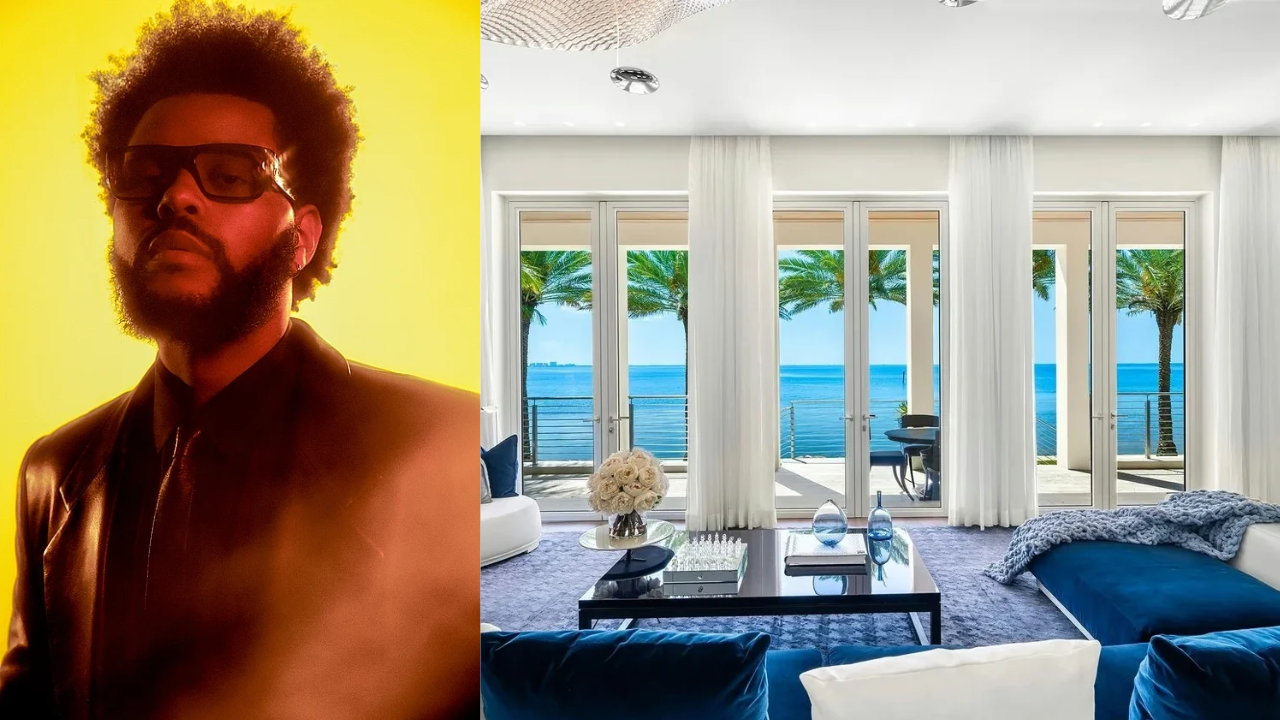
For Abel Tesfaye—known to the rest of the planet as The Weeknd—silence is a vanishing natural resource, and protecting it requires concrete, deep water, and fifty million dollars.
When real estate records confirmed that the Grammy-winning artist had quietly closed on a massive waterfront estate in Coral Gables, Florida, the headlines wrote themselves in their usual breathless shorthand. Fifty million dollars. Private superyacht dock. Ultra-luxury. The standard coverage treats a purchase like this as a scoreboard entry, another shiny trophy placed beside platinum records and stadium sellouts. It invites you to gawk at the square footage and move on.
That reading misses the point entirely. You do not spend fifty million dollars on a fortified peninsula in South Florida just because you want a nicer kitchen. You do it because fame, at a certain altitude, becomes a physical siege, and water is the only moat left that paparazzi cannot easily cross on foot.
The Architecture of Escape
To understand why a kid who once slept on friends' couches in Scarborough, Toronto, ends up buying a compound anchored by deep-water dockage in Coral Gables, you have to understand the invisible tax of global celebrity.
Consider a hypothetical scenario that plays out every single week in Los Angeles, Miami, and New York. Picture a musician walking out of a recording studio at three in the morning. His ears are ringing from twelve hours of bass frequencies. His throat feels like sandpaper. All he wants is a glass of water and thirty minutes where nobody asks him for a selfie, a verse, or a handout. He gets into a blacked-out SUV, and within four blocks, two cars fall into formation behind his bumper, their drivers holding telephoto lenses steady against the steering wheel. They follow him to his gate. They wait outside his wall until noon.
I have spent years covering high-net-worth real estate and the strange psychological toll of extreme visibility, and the pattern never changes. At first, newly wealthy artists buy for status. They want the glass box hanging off the Hollywood Hills with the infinity pool overlooking the Sunset Strip. They want to be seen seeing the city.
Then, usually around year five of relentless exposure, the panic sets in. The glass box turns into a fishbowl. Drones buzz over the pool deck. Tour buses idle outside the driveway. Suddenly, the architecture of display has to be torn down and replaced with the architecture of disappearance.
Coral Gables is built for disappearance. Unlike the neon carnival of South Beach just a few miles northeast, the gated waterfront enclaves of Coral Gables—places like Gables Estates and Cocoplum—operate under a strict, unspoken code of invisibility. The banyan trees grow so thick over the roads that sunlight barely touches the asphalt. Security checkpoints do not wave people through with a smile; they stop, verify, and turn away anyone whose name is not on a pre-cleared manifest.
Why the Dock Matters More Than the Marble
When people read about a private superyacht dock attached to a fifty-million-dollar mansion, they immediately picture champagne parties and music video shoots. They imagine excess.
Look closer at the logistics of Biscayne Bay, and a very different picture emerges.
A deep-water dock in a protected Coral Gables canal is not just a parking spot for a boat; it is a private highway that bypasses every road, every red light, and every waiting camera in Miami-Dade County. When a property offers unrestricted ocean access—meaning no low fixed bridges between the backyard seawall and the open Atlantic—a resident can step off their back patio, board a tender or a yacht, and be miles offshore before a single photographer at the front gate realizes the house is empty.
Think of it like a secret tunnel beneath a medieval castle, except the tunnel is open sky and salt water.
In real estate terms, that unobstructed access is what drives the price into the stratosphere. You can import Italian limestone anywhere. You can build a subterranean garage or a custom vocal booth in any zip code. You cannot manufacture deep water, and you cannot conjure extra linear feet of protected waterfront out of thin air. In South Florida's ultra-prime market, land is finite, permits for new seawalls are notoriously difficult to secure, and properties capable of mooring a vessel north of one hundred feet without dredging are treated like rare paintings.
By securing a compound with serious dockage, Tesfaye did not just buy a house. He bought an exit strategy.
The Shift From Hills to Coastlines
There is a broader migration happening right now among the world's most recognizable entertainers, tech founders, and athletes, and this Florida acquisition sits right at the center of it.
For decades, the gravitational center of music and film money was Los Angeles. Beverly Hills, Bel-Air, and Holmby Hills were the undisputed capitals of celebrity real estate. Tesfaye himself played that game at the highest level, famously purchasing a staggering $70 million estate in Bel-Air in 2021—one of the biggest residential deals in California history at the time.
So why add a $50 million Florida fortress to the portfolio?
Part of the answer is purely practical, rooted in economics and lifestyle shifts that have reshaped American wealth over the last several years. Florida imposes no state income tax, a detail that becomes rather persuasive when your world tours gross hundreds of millions of dollars and your catalog generates massive annual royalties. Miami has also transformed from a seasonal vacation spot into a year-round creative hub, boasting world-class recording facilities, a thriving culinary scene, and direct flight paths to Europe and Latin America.
Yet the deeper reason is psychological. Los Angeles is a company town where the company is fame. Even behind twelve-foot hedges in Bel-Air, the industry is pressing against your ribs. Every dinner reservation is a transaction; every hike in the canyons carries the risk of an ambush.
South Florida, by contrast, offers a different kind of rhythm. The heat slows people down. The water absorbs noise. When you look out across Biscayne Bay at dusk, watching the horizon turn the color of a bruised plum while pelicans skim six inches above the chop, the machinery of the entertainment industry feels a thousand miles away. You are no longer a brand. You are just a person standing near the ocean, listening to the tide slap against concrete pilings.
What Fifty Million Actually Buys
It is easy to get lost in the absurdity of the number. Fifty million dollars is an amount of money so large it stops feeling real, turning into monopoly currency in the public imagination. Most of us will never earn a fraction of that across three lifetimes of hard work, and pretending otherwise would be dishonest.
When you strip away the shock of the price tag, however, you start to see what ultra-high-end estates actually represent in the modern era. They are self-contained ecosystems designed to eliminate friction.
At this level of residential design, every square foot is engineered to remove the need to ever leave the property. The kitchens are built for private chefs who can source wild-caught stone crab and organic produce without the homeowner ever stepping foot in a grocery aisle. The wellness wings rival five-star Swiss clinics—infrared saunas, cold plunges, hyperbaric chambers, and massage rooms designed to put a body back together after ninety-minute stadium performances under blistering pyrotechnics. The acoustic engineering inside the walls ensures that a producer can blast a sub-bass track at two in the afternoon without rattling a single wine glass in the dining room next door.
I remember walking through a comparable waterfront property in Miami a few years back during a private showing. What struck me was not the gold fixtures or the imported stone, which honestly blur together after you see enough of them. What stayed with me was the sound—or rather, the complete absence of it. The moment the heavy motorized glass doors slid shut, the roar of the wind off the bay vanished instantly. It felt like stepping inside a recording booth the size of a museum. The air smelled faintly of cedar and chilled saltwater. For the first time all week, my shoulders dropped two inches away from my ears.
That sensory shift is the real product on sale. Not marble. Not square footage. Just the physical sensation of your nervous system finally standing down.
The Paradox of the Fortress
Still, there is a quiet irony tucked inside every gated estate, one that anyone who has ever chased security knows intimately.
The higher you build the walls, the smaller your world becomes.
We spend our lives trying to earn enough money to buy freedom, only to discover that extreme wealth requires extreme containment. You trade the chaos of the public street for the curated isolation of a private island or a guarded peninsula. You gain total control over who enters your space, yet you lose the accidental magic of bumping into a stranger at a coffee shop or wandering down an unfamiliar avenue just to see where it leads.
For an artist like The Weeknd—whose entire career was built on chronicling the lonely, nocturnal edges of excess, heartbreak, and alienation—that tension is familiar territory. His music has always lived in the space between glittering luxury and profound solitude. Buying a fifty-million-dollar sanctuary on the water does not resolve that tension; it turns it into architecture.
Out on the back terrace of Coral Gables, the lights of downtown Miami shimmer across the dark water like a distant circuit board. A superyacht sits tied to the dock, its white hull gleaming faintly under the security lamps, engines warm and ready to slip into the night at a moment's notice. Inside the house, behind hurricane-rated glass and towering tropical palms, the doors lock with a soft, hydraulic click, sealing out the noise of a world that never stops asking for one more song.