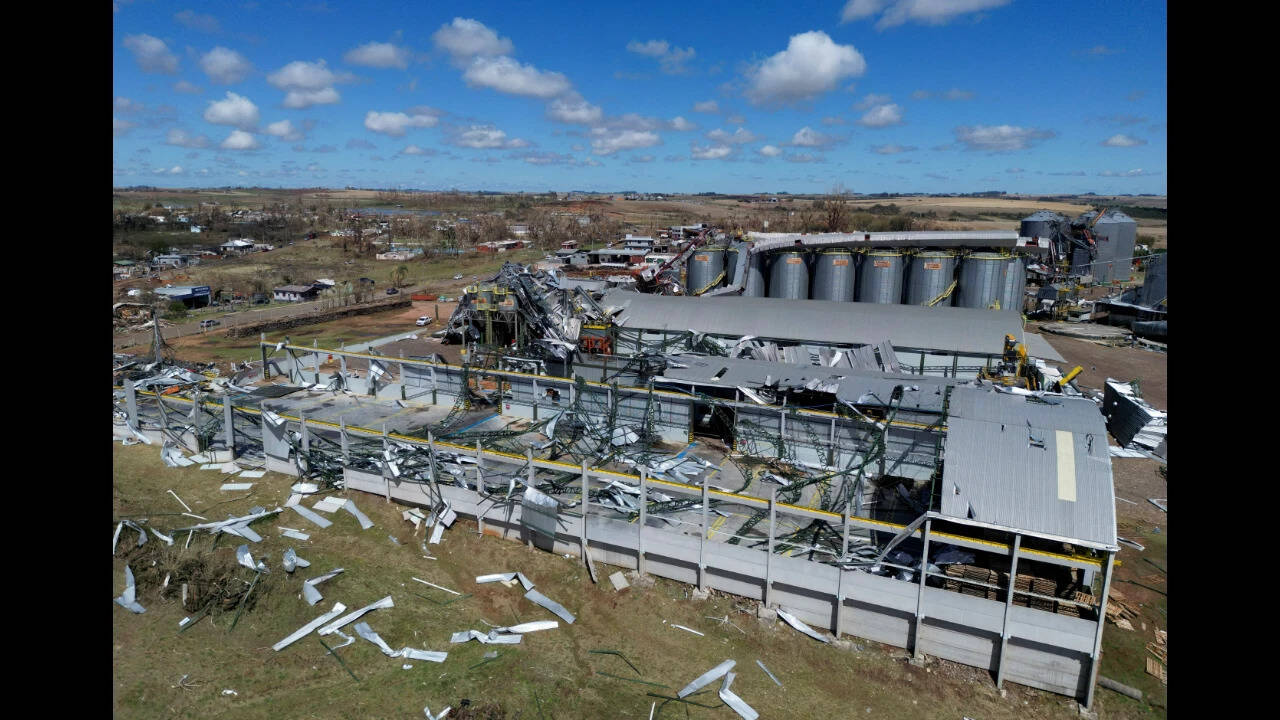
A violent supercell thunderstorm tore across the region, killing at least three people, leaving authorities investigating a possible fourth fatality, and damaging roughly 5,000 homes in a matter of hours. Those are the bare facts. Everyone is reporting them. Yet those numbers—three dead, one unconfirmed, five thousand roofs stripped or shattered—tell you almost nothing about why a single convective storm cell managed to chew through modern suburban infrastructure like wet cardboard, or why the recovery bill will quietly bankrupt families who thought they were fully insured.
Storms happen. What happened here was a textbook demonstration of how meteorological violence collides with decades of compromised building standards, strained municipal alert systems, and an insurance market engineered to pass catastrophic losses straight back onto homeowners.
The Anatomy of a Supercell Engine
Most people hear "thunderstorm" and picture heavy rain, a few cracked branches, and a loud night. A supercell is an entirely different machine. Unlike ordinary pulse storms that rain themselves out in thirty minutes, a supercell sustains itself for hours through a deep, persistently rotating updraft called a mesocyclone.
Wind shear makes the difference. When surface winds blow from one direction while upper-level winds scream in from another at high velocity, the atmosphere begins to roll horizontally like a massive invisible barrel. A strong updraft tilts that horizontal spin vertical. Once that rotation locks in, the storm stops choking on its own cold downdrafts. Instead, the warm, buoyant inflow air and the rain-cooled outflow separate cleanly, allowing the storm to feed continuously on heat and moisture.
That rotating core acts like a vacuum cleaner and a hail cannon combined. Updraft speeds inside a mature supercell routinely exceed 100 miles per hour, suspending giant hailstones in sub-freezing air until they grow heavy enough to plummet at terminal velocity. Meanwhile, the rear-flank downdraft slams cold, dense air straight into the ground, spreading outward in straight-line wind gusts that easily rival a weak tornado.
You do not need a funnel cloud touching down to flatten a neighborhood. Straight-line winds roaring out of a supercell's rear flank at 80 to 100 miles per hour hit broadside against garage doors, gable ends, and overhanging eaves. Once a garage door buckles inward, air pressure inside the house spikes instantly. The roof lifts off from the inside out, and the exterior walls—suddenly deprived of lateral support—collapse outward.
Why 5,000 Homes Failed at Once
Five thousand damaged structures is not merely a weather statistic. It is a structural audit delivered at high speed.
Walk through any tract development built over the last thirty years and look closely at how residential roofs and siding are actually assembled. Modern suburban housing relies heavily on oriented strand board (OSB) sheathing, lightweight engineered trusses, vinyl siding, and asphalt shingles rated for moderate wind zones. When builders cut corners—using staples instead of ring-shank nails, skipping hurricane clips that tie roof trusses directly to wall studs, or leaving gable ends under-braced—the house passes municipal inspection easily on a sunny Tuesday.
Then a supercell arrives.
Consider a hypothetical example of two neighboring houses built twenty years apart in the same subdivision. The older home uses thicker plywood roof decking nailed tightly along the rafters, hip-roof geometry that deflects wind smoothly over four sloped sides, and brick veneer anchored to the framing. The newer home next door features a steep, complex roofline with multiple valleys, wide overhangs, and a tall, flat gable wall facing west into the prevailing storm track. When 90-mile-per-hour gusts slam into that flat gable end, wind pressure concentrates at the roof peak and corners. The vinyl siding peels away in strips, exposing the thin foam board beneath. Hail fractures the brittle asphalt shingles, punching holes straight through the OSB decking. Within four minutes, thousands of gallons of wind-driven rain pour into the attic, collapsing drywall ceilings onto bedrooms below.
Neither house was hit by a tornado. One survived with minor cosmetic scuffs; the other is uninhabitable for eight months.
Multiply that vulnerability across sprawling subdivisions built rapidly to meet housing demand, and 5,000 damaged homes stops looking like an act of God. It looks like predictable engineering failure.
The Hidden Danger of Hail and Water Intrusion
Wind gets the dramatic aerial footage, yet hail and secondary water intrusion often drive the majority of total structural losses. Golf-ball- to baseball-sized hailstones shatter skylights, dent soft metal flashing around chimneys, and strip the protective mineral granules off asphalt shingles. Even when a roof does not cave in during the storm, bruised shingle mats crack open weeks later under normal summer heat, turning a minor cosmetic claim into pervasive black mold behind living room walls.
The Gray Zone Between Three Deaths and Four
When emergency officials confirm three fatalities while quietly investigating a fourth, the public often assumes bureaucrats are stalling or hiding bad news. The reality is far more clinical—and far more troubling for anyone tracking the true human cost of severe weather.
Medical examiners divide storm fatalities into direct and indirect deaths. Direct deaths are brutally unambiguous: someone crushed by a falling oak tree, struck by flying debris, or trapped inside a collapsed structure while the storm is actively overhead.
Indirect deaths live in a messy administrative gray zone. Suppose an elderly resident loses grid power during the storm, runs out of backup battery capacity on an oxygen concentrator six hours later, and dies before paramedics can navigate blocked roads. Or consider a homeowner who climbs onto a slick, hail-damaged roof the next morning to nail down a blue tarp, slips, and suffers a fatal head injury. Or a driver who hydroplanes into a flooded underpass long after the supercell has moved two counties east.
Forensic investigators have to trace causation through toxicology reports, structural engineering assessments, and emergency dispatch logs before adding a fourth name to the official storm ledger. That process takes days, sometimes weeks. By the time the medical examiner issues a ruling, the national news cycle has already moved on, leaving the official death toll frozen in public memory at three even when the storm's true lethality was higher.
Warning Fatigue and the Last-Mile Failure
Meteorologists can spot a rotating supercell on Doppler radar long before it crosses a county line. Dual-polarization radar shows hail cores forming aloft, velocity scans reveal tight mid-level rotation, and storm spotters confirm wind damage on the ground. Technically, detection has never been sharper.
Yet people still die in their cars, in mobile homes, and in upstairs bedrooms.
The failure happens in the last mile of risk communication. Residents living in severe weather corridors receive dozens of severe thunderstorm warnings every spring and summer. Most of those warnings bring twenty minutes of heavy rain, a flickering porch light, and nothing else. Over time, the public learns to treat a severe thunderstorm warning as background noise—something fundamentally less urgent than a tornado warning.
That mental shortcut kills people.
A high-end supercell producing destructive straight-line winds and giant hail carries lethal kinetic energy indistinguishable from a tornado to anyone caught inside a manufactured home or driving down an interstate highway. When emergency alerts rely on generic text templates that sound identical whether winds are 60 miles per hour or 95 miles per hour, residents do not move to interior hallways. They stay near windows filming the sky on their phones until the glass blows inward.
The Second Storm Inside the Insurance Policy
For the 5,000 families staring at tarped roofs and soaked insulation, the meteorological event is already over. The financial storm is just beginning, and it lasts years.
Over the past decade, property insurers hammered by consecutive years of severe convective storm losses have quietly rewritten standard homeowners policies. Many homeowners do not read the fine print until an adjuster stands in their driveway with a clipboard.
Three mechanisms routinely blindside storm victims:
- Percentage Wind and Hail Deductibles: Instead of a flat $1,000 deductible, policies increasingly impose a separate wind or hail deductible equal to 2 percent or 5 percent of the home's insured value. On a $400,000 house, a 5 percent deductible means the homeowner pays the first $20,000 out of pocket before the insurer writes a single check.
- Actual Cash Value (ACV) Roof Schedules: Insurers routinely depreciate roofs once they pass ten or fifteen years of age. If a twelve-year-old roof costs $24,000 to replace, an ACV schedule may pay out only $9,000 after depreciation and deductibles, leaving the family to scramble for a $15,000 loan just to keep rain out of their house.
- Matching Exclusions: When wind rips half the siding off the west wall of a house, insurers frequently refuse to pay for replacing the undamaged walls—even when the original siding color was discontinued years ago. The homeowner is left with a patchwork facade that tanks resale value unless they pay thousands extra themselves.
Then come the storm chasers. Within twenty-four hours of a 5,000-home disaster, out-of-state roofing crews flood local neighborhoods, knocking on doors with aggressive sales pitches and "assignment of benefits" contracts. Desperate homeowners sign away their insurance claim rights in exchange for fast tarp work, only to watch contractors inflate invoices, stall repairs when insurers push back, or vanish entirely with deposit checks.
Supply Chains and the Municipal Bottleneck
Even homeowners with gold-plated insurance policies and honest local contractors hit a hard physical wall: regional capacity.
Five thousand damaged homes in one metro area instantly overwhelms local labor and material supply chains. Shingle manufacturers cannot teleport fifty thousand squares of architectural shingles overnight. Municipal building departments staffed to process forty roofing permits a week suddenly face four thousand permit applications, stalling inspections and delaying bank draws on insurance payouts.
Dumping tons of wet drywall, shattered glass, fiberglass insulation, and snapped timber onto curbsides creates a parallel municipal crisis. Debris haulers prioritize major arterial roads first, leaving residential cul-de-sacs choked with nails, jagged metal, and rotting building materials for weeks. Every flat tire on an emergency vehicle or utility truck slows power restoration for everyone else.
What Survival Actually Requires
Surviving a high-end supercell—both physically and financially—comes down to preparation executed long before radar turns purple.
- Treat high-end severe thunderstorm warnings like tornado warnings. If a warning mentions winds exceeding 75 miles per hour or baseball-sized hail, get away from windows and move to the lowest interior room immediately.
- Audit your roof deductible today. Check your policy declarations page for separate wind and hail percentages and verify whether your roof is covered at full replacement cost or depreciated actual cash value.
- Document every exterior elevation before storm season. High-resolution timestamped photos of intact shingles, gutters, windows, and siding eliminate the easiest excuse adjusters use to deny claims: claiming damage was pre-existing wear and tear.
- Upgrade critical attachment points during normal reroofing. Paying a roofer slightly more for ring-shank nails, sealed roof deck tape, and reinforced garage door struts turns a catastrophic blowout into a minor repair bill.
Five thousand homes do not fail by accident, and three deaths—potentially four—are never purely the fault of the sky. A supercell simply exposes every shortcut taken on the ground, leaving ordinary families to pay the balance when the wind finally dies down.