Mainstream geopolitical analysts are celebrating Cambodia’s sudden invocation of a little-used United Nations mechanism to solve its maritime border dispute with Thailand. The media presents a comforting narrative: after decades of bilateral deadlock, a five-member UNCLOS Conciliation Commission will step in, untangle the overlapping claims area in the Gulf of Thailand, and unlock an estimated $300 billion worth of natural gas and oil.
It is a beautiful fantasy. It is also entirely wrong.
The decision by Phnom Penh to trigger compulsory conciliation under the United Nations Convention on the Law of the Sea—and Bangkok’s reluctant agreement to send two representatives—is not a diplomatic breakthrough. It is a structural trap that guarantees deeper economic paralysis, extended legal limbo, and a complete shutdown of regional energy development. Relying on international institutions to solve zero-sum resource conflicts ignores the brutal realities of sovereign politics and energy exploration finance.
The Flawed Premise of Compulsory Conciliation
The foundational mistake of the current enthusiasm is the belief that international arbitration creates certainty. Analysts point excitedly to the only historical precedent for this specific UNCLOS mechanism: the 2018 resolution of the maritime boundary between Timor-Leste and Australia.
That comparison collapses under the slightest scrutiny. Australia and Timor-Leste were disputing a defined, bilateral maritime boundary in open waters, free from intense domestic hyper-nationalism or active, blood-soaked land border disputes.
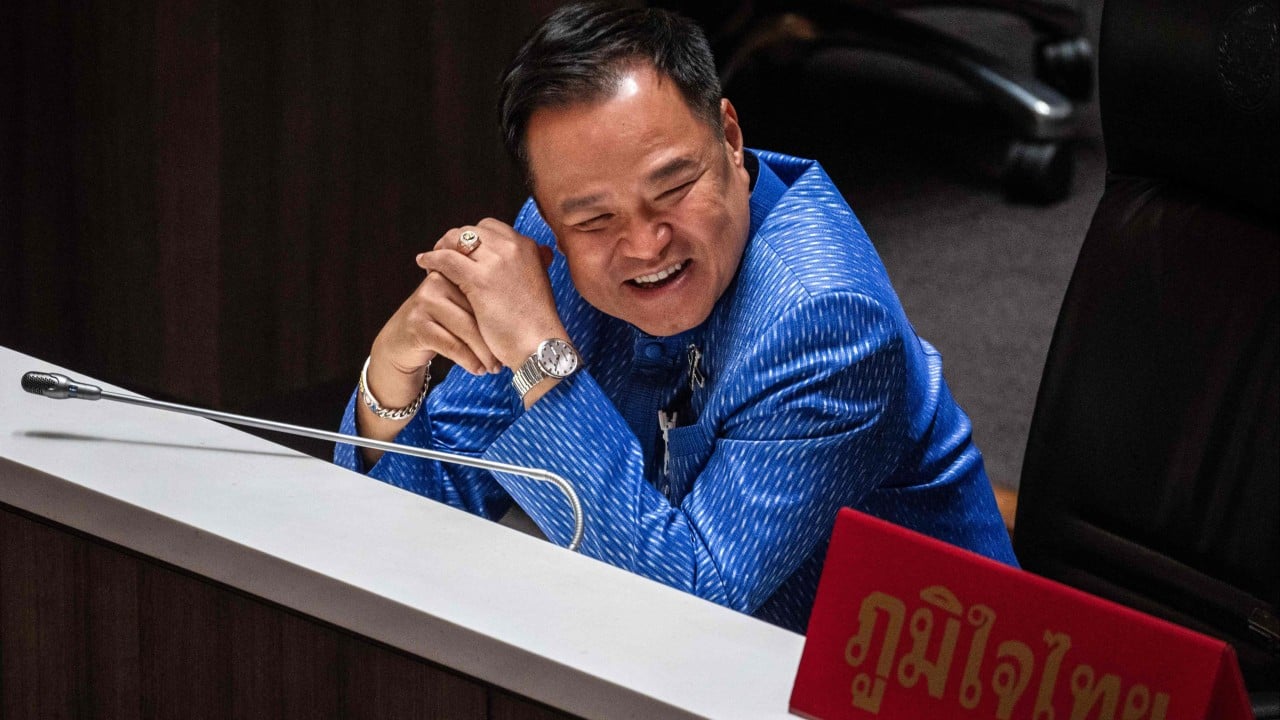
The situation in the Gulf of Thailand is radically different. Just last year, two rounds of intense combat along the disputed land border killed nearly 150 people and displaced 300,000 civilians. Trust is not low; it is non-existent. When Thai Prime Minister Anutin Charnvirakul unilaterally tore up the 2001 Memorandum of Understanding (MoU 44), he was responding to intense domestic pressure to halt concessions to a neighbor perceived as hostile.
More importantly, the institutional design of an UNCLOS conciliation commission is fundamentally unsuited for this conflict. Consider the mechanics:
- Both nations appoint two conciliators.
- Those four choose a fifth member to act as chairperson.
- The commission investigates the legal claims and issues a report.
The fatal flaw? The final recommendations are entirely non-binding.
I have watched energy consortiums and sovereign states sink millions of dollars into international legal maneuvers, only to realize that a piece of paper from a UN panel cannot force a sovereign nation to surrender territory or resources. If the commission rules in a way that favors Cambodia's sweeping 1972 claims, the Thai public and military will reject it instantly. If it favors Thailand's line, Phnom Penh will walk away.
By upgrading this from a bilateral negotiation to an international legal theater, both governments have boxed themselves into corners. To compromise under a UN spotlight looks like a capitulation to a domestic audience. The internationalization of the dispute makes pragmatism impossible.
The $300 Billion Energy Mirage
The media loves to throw around the $300 billion figure, citing the 12 trillion cubic feet of natural gas and substantial oil reserves trapped beneath the seabed. The lazy assumption is that once a legal framework is proposed, international oil majors will rush in with drill ships and capital.
This reveals a profound ignorance of how project finance and upstream energy exploration operate.
Upstream energy investments require absolute legal stability over a 20-to-30-year horizon. Exploration and production companies will not deploy billions of dollars of capital into a maritime zone where the underlying boundary is based on a non-binding UN recommendation that either state can reject at the next election cycle.
Furthermore, the window for mega-scale fossil fuel infrastructure in Southeast Asia is narrowing. By pushing this into a UN process that will take at least two to three years just to yield a non-binding report, both nations are guaranteeing that these resources remain stranded forever. By the time any legal consensus is reached, the global energy transition and shifting capital markets will have rendered deep-water exploration in a highly contested, militarized gulf economically unviable.
Dismantling the PAA Fallacy: Can the UN Enforce a Fair Solution?
A common question dominating the public discourse is whether the UN framework offers a fairer, more systematic approach than failed bilateral talks.
The brutal answer is no. International maritime law operates on principles of equity and distance, but it cannot override raw political power.
Thai Foreign Minister Sihasak Phuangketkeow exposed the real problem: Cambodia is using the UN framework to push for immediate resource-sharing formulas before the actual maritime boundary is delimited. This is a direct inversion of legal logic. You cannot share resources in an area until you know exactly whose jurisdiction applies to the seabed.
By attempting to bypass the hard work of bilateral border demarcation through a multilateral back door, Cambodia has triggered an aggressive counter-reaction. Prime Minister Anutin has already declared that Bangkok will halt all other two-way cooperation, keeping border gates closed and freezing land-border management. The pursuit of a UN legal victory has successfully destroyed the broader bilateral relationship.
The Sovereign Reality
The only path to unlocking the energy wealth of the Gulf of Thailand was the flawed, slow, messy framework of joint development zones independent of final boundary lines—the very spirit of the 2001 MoU that was just destroyed.
International arbitration is not a magic wand for sovereign disputes; it is an escalation mechanism disguised as diplomacy. By celebrating the involvement of the United Nations, observers are cheering for the formal institutionalization of a stalemate. Thailand and Cambodia are now locked into a rigid legal process that will consume years, yield nothing binding, alienate international energy capital, and ensure that the $300 billion in the Gulf of Thailand remains exactly where it has been for the last half-century: buried uselessly under the ocean floor.