The United States government is attempting to leverage $2 billion in life-saving health aid to force Zambia into granting preferential access to its vast critical mineral reserves. This high-stakes diplomatic gamble has backfired, resulting in a public breakdown of relations as Lusaka refuses to sign a deal that effectively trades the privacy of its citizens and the sovereignty of its mines for medical funding. The dispute centers on two separate but legally entwined agreements that would require Zambia to hand over sensitive patient data and give American mining firms a "first-look" advantage over global competitors.
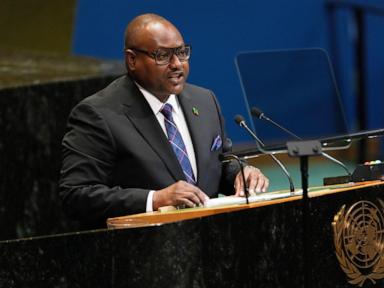
Zambia's Foreign Minister, Mulambo Haimbe, broke the diplomatic silence this week, confirming that negotiations have stalled because Washington insisted on "coupling" a health Memorandum of Understanding (MOU) with a critical minerals framework. The message from Lusaka is blunt: help for the 1.3 million Zambians living with HIV cannot be used as a bargaining chip for copper and cobalt.
The Anatomy of a Bundled Deal
The proposed $2 billion health package is not a standard grant. It is a five-year commitment aimed at maintaining the infrastructure for HIV/AIDS, malaria, and tuberculosis treatment—services that have been the backbone of US-Zambia relations for decades through the PEPFAR program. However, the new terms introduced by the Trump administration represent a radical departure from traditional humanitarian aid.
Under the proposed framework, the $2 billion in health assistance is contingent upon Zambia signing a parallel "Critical Minerals Agreement." This second document reportedly demands preferential treatment for U.S. companies, including tax breaks and simplified licensing, as the West scrambles to secure the supply chains needed for the global energy transition.
The technical requirements of the health deal are equally staggering. Beyond the minerals, the U.S. is demanding access to granular health data. While Washington frames this as a necessity for "transparency and impact monitoring," Zambian officials view it as a massive breach of data sovereignty. They argue that the level of patient-level data requested would violate national privacy laws and could be used to profile the population for future commercial or strategic purposes.
The Fiscal Burden on the Recipient
There is a hidden cost to this "aid." To unlock the $2 billion, Zambia—a country that only recently emerged from a punishing debt restructuring process—is being asked to provide approximately $340 million in counterpart funding.
The agreement also mandates that Zambia hire 40,000 new health workers by 2030. This is a 50% increase over current staffing levels. For a nation operating under strict fiscal constraints, such a requirement is not just a logistical hurdle; it is a potential debt trap. If the government fails to meet these hiring quotas, the U.S. reserves the right to suspend the very health funding the hiring was meant to support.
Why Zambia is the New Geopolitical Ground Zero
To understand why the U.S. is playing such a hard hand, one must look beneath the soil of the Copperbelt. Zambia is one of the world’s most significant producers of high-grade copper and cobalt, the dual engines of the electric vehicle (EV) and semiconductor industries.
| Mineral | Strategic Application | Global Context |
|---|---|---|
| Copper | EV wiring, power grids, semiconductors | Essential for all green energy infrastructure. |
| Cobalt | Lithium-ion battery cathodes | Zambia and DRC hold the bulk of global reserves. |
| Nickel | High-energy-density battery anodes | Demand is expected to triple by 2030. |
| Graphite | Battery anodes | Currently dominated by Chinese supply chains. |
The U.S. strategy is a belated response to decades of Chinese dominance in the region. Beijing’s "no-strings-attached" infrastructure-for-minerals model has left Washington on the outside looking in. By tying health aid—the one area where the U.S. still holds significant soft power—to mineral access, the State Department is attempting to force a pivot.
However, Zambia’s President Hakainde Hichilema, despite his pro-Western reputation, is finding it impossible to sell this deal domestically. The opposition has characterized the negotiations as a modern form of "extortion," and the government is wary of granting the U.S. the same kind of exclusive access that the Democratic Republic of Congo (DRC) recently conceded in exchange for security assistance.
The Data Sovereignty Deadlock
The objection to data sharing is not unique to Zambia. Ghana and Zimbabwe have already rejected similar U.S. health frameworks, citing the same "privacy-for-pills" trade-off.
The U.S. demands go beyond high-level statistics. They seek access to the digital backbone of the national health system. In an era where biological data is becoming a strategic asset, Lusaka is unwilling to let a foreign power control the health metrics of its entire workforce.
"The Zambian Government has been consistent that the agreements must be considered separately on their respective merits," Foreign Minister Haimbe stated. "We will not allow our resources or our people's data to be used as collateral."
Outgoing U.S. Ambassador Michael Gonzales has fired back, accusing Zambia of "failing to engage" and denying that the U.S. would ever intentionally withhold life-saving medication. But the timeline tells a different story. An internal deadline of April 30 passed without a signature, and the "stick" of funding cuts is already being felt. In early 2025, AIDS relief funding saw temporary cutbacks, a move widely interpreted by local activists as a warning shot from Washington.
The Risk of a Total Collapse
If the deadlock continues, the consequences for regional stability are severe. The U.S. is currently backing the Lobito Corridor, a massive rail project designed to transport minerals from Zambia and the DRC to the Atlantic coast of Angola. This project is the centerpiece of the U.S. strategy to bypass Chinese-controlled ports.
If the health and minerals deal collapses, the diplomatic goodwill required to finish the Lobito Corridor could evaporate. Already, Zambia is diversifying its partners. While the U.S.-backed KoBold Metals is exploring the massive Mingomba deposit, the Zambian government is simultaneously welcoming renewed investment from China’s JCHX Mining and India’s Vedanta Resources.
By insisting on an "all-or-nothing" bundled agreement, the U.S. risks losing the very mineral access it is trying to secure. The administration's transactional approach ignores a fundamental reality of modern African diplomacy: resource-rich nations are no longer willing to be treated as passive recipients of aid. They are market players who know the exact value of what they hold in the ground.
The path forward requires an immediate "uncoupling" of these tracks. Washington must decide if its priority is the health of 1.3 million people or a tactical advantage in the battery wars. Zambia has already made its choice.


