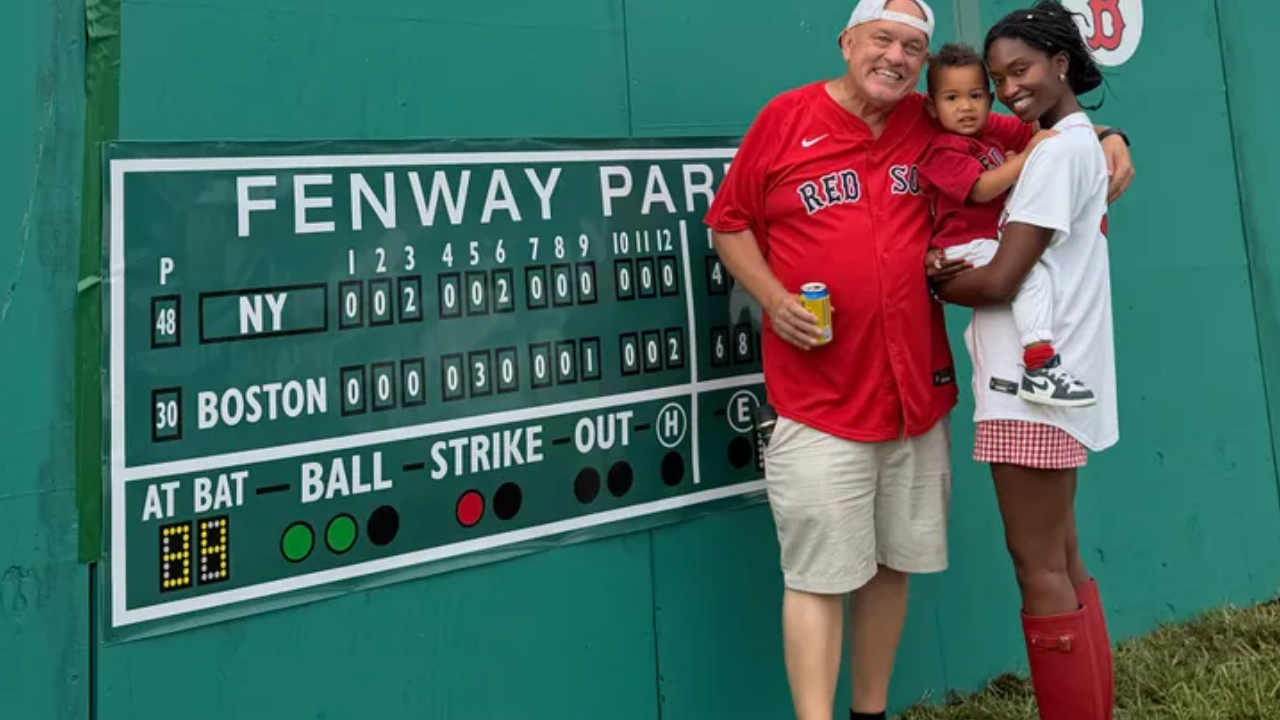
Spending $2,000 on a backyard baseball field sounds absurd until you price out a single season of travel ball.
Most parents drop twice that on tournament fees, hotel stays, and composite bats before their kid even hits seventh grade. Meanwhile, a Tampa couple looked at their ordinary yard, spent roughly two grand on lumber, paint, and sweat, and built a miniature version of Boston's Fenway Park for their son. The story went viral for obvious reasons. A scaled-down Green Monster sitting behind a Florida suburban house hits every nostalgic nerve a baseball fan has.
Yet almost every viral write-up misses the real lesson here. People look at that Tampa build and assume they need massive square footage or contractor-level carpentry skills to pull off something similar. They don't. Having helped plan and troubleshoot backyard sports setups for years, I've seen five-figure turf installations sit empty while a $400 plywood wall and a bucket of battered baseballs get used every single afternoon.
Why the Tampa Mini Fenway Struck Such a Nerve
Look at what the Tampa project actually accomplished. On a $2,000 budget, you aren't buying commercial-grade synthetic turf, stadium lighting, or custom steel backstops. You're buying pressure-treated framing lumber, exterior plywood, gallons of distinct green paint, foul pole PVC or metal piping, and basic hardware.
The magic of a mini Fenway isn't luxury. It's identity.
Fenway Park has been standing in Boston since 1912, making it the oldest active ballpark in Major League Baseball. Because it was wedged into an irregular city block, its dimensions are famously weird. That 37-foot-2-inch left-field wall—the Green Monster—wasn't designed for aesthetic charm. It was built to keep home runs from smashing storefront windows on Lansdowne Street and to stop passersby from watching games for free.
That exact quirk makes Fenway the single best stadium to replicate in a tight residential yard.
Think about why. If you try to build a miniature Dodger Stadium or Yankee Stadium, you need sweeping, symmetrical outfield curves that eat up huge amounts of lawn. Fenway's left field cuts in sharply. A tall wall close to home plate turns an awkward, narrow backyard corner into a legitimate playing feature. Suddenly, a line drive that would normally bounce into the neighbor's hydrangeas becomes a double off the Monster.
The Biggest Mistakes Parents Make With Backyard Ballparks
When families see a story like the Tampa build, enthusiasm usually outruns planning. I see the same three mistakes ruin backyard field projects before the paint even dries.
Chasing Regulation Proportions Instead of Playability
You don't have 310 feet down the left-field line. Stop pretending you do.
The biggest blunder in backyard wiffle ball or youth baseball design is scaling everything down mathematically without thinking about how a ball actually travels. If you shrink a field to 60 feet down the lines, a standard baseball becomes dangerous, and even a plastic wiffle ball will clear a six-foot fence on a half-swing.
Height solves distance. That's why the Tampa Green Monster concept works so well in practice. By building a disproportionately tall left-field barrier relative to the short foul line, you force hitters to elevate the ball sharply to hit a home run. Hard grounders and low line drives stay in play, which keeps games competitive for kids of different ages and skill levels.
Ignoring Drainage and Grass Survival
Florida yards, like the one in Tampa, deal with intense afternoon downpours and sandy soil. Put heavy plywood walls directly on damp turf without proper ground clearance or gravel drainage, and the bottom edge will rot out within two summers.
Leave at least two to three inches of air gap beneath the lowest horizontal board, or set your base framing on concrete deck blocks rather than burying untreated wood in the dirt. Even pressure-treated lumber rated for ground contact takes a beating when sprinklers hit it every morning.
Overbuilding the Infield Dirt
Parents love the look of a crisp clay infield. They hate maintaining it.
Real infield mix—a blend of sand, silt, and clay—turns into concrete when baked dry and soup when rained on unless you drag, water, and tarpaulin it regularly. Unless you genuinely enjoy groundskeeping as a weekend hobby, skip the excavated dirt diamond. Paint your base paths directly onto closely mowed grass using athletic field marking paint, or use heavy-duty throw-down rubber bases that you can pull up before mowing.
How to Plan a $2,000 Backyard Ballpark That Actually Lasts
If the Tampa family's $2,000 build has you eyeing your own backyard, break your budget down by structural priority rather than cosmetic details. Most of your money should go into things that stop balls and resist wind.
Wind Load Is Your Real Enemy
A solid 10-foot or 12-foot plywood wall acts like a giant sail. In places like Tampa—or anywhere prone to summer thunderstorms—a poorly anchored backyard outfield wall becomes a neighborhood hazard during a 45 mph gust.
You can't just sink 4x4 posts a foot into the ground and hope for the best. Follow basic outdoor fencing standards:
- Dig post holes below the frost line, or at least 24 to 36 inches deep in warm climates like Florida, using roughly one-third of the above-ground post height as your burial rule of thumb.
- Use 4x6 or heavy-duty 4x4 pressure-treated posts spaced no more than six feet apart if the wall exceeds eight feet in height.
- Pour concrete footings with a slight crown at the top so rainwater sheds away from the wood post rather than pooling around the base.
- Add angled kickers or rear bracing behind the wall if local wind codes or soil conditions make vertical posts flex.
Checking your local municipal height limits before buying a single board saves massive headaches. Many suburban homeowners associations and city zoning codes cap standard backyard fences at six feet, though freestanding sports backstops or decorative structures sometimes fall under different setback rules if they aren't built directly on the property line.
Getting the Fenway Look Without Wasting Money
You don't need custom vinyl wraps to make a backyard wall scream Boston. Half the charm of Fenway Park comes from simple, high-contrast visual cues that cost next to nothing in paint.
Start with a flat or satin exterior latex paint in deep sage-forest green—hardware stores can color-match Fenway Green easily if you ask for the classic ballpark shade. Paint the manual scoreboard section in matte black near the bottom left, using crisp white stenciled numbers for innings and runs. Add a thin yellow strip along the top edge of the wall to mark the home run line, and mount two bright yellow PVC pipes at the foul corners.
Those four visual touches do 90 percent of the heavy lifting. From twenty feet away, anyone walking into your yard immediately knows what they're looking at.
Choosing the Right Ball for a Backyard Stadium
A scaled-down ballpark only stays fun if nobody breaks a window or takes a line drive to the shins. The ball you choose dictates the entire layout of your yard.
- Standard Wiffle balls or Blitzballs: Best for yards under 80 feet deep. They curve wildly, top out quickly, and won't dent siding or shatter glass.
- Foam or soft-core training baseballs: Great for kids working on real swing mechanics in a 100-foot yard. They come off an aluminum or wood bat with satisfying pop while losing momentum fast in the air.
- Regulation leather baseballs: Skip these entirely unless you have a full protective cage or live on multi-acre property with zero neighbors in range.
Honest truth? Wiffle balls create better backyard games anyway. Because anyone can throw a nasty curveball or riser with a perforated plastic ball, younger siblings and parents who haven't swung a bat in fifteen years can compete on equal footing with varsity players.
Why Projects Like This Beat Organized Youth Sports
Youth sports in America have gotten ridiculously expensive and overly serious. According to data tracked by the Aspen Institute's Project Play, the average American family spends hundreds—and in travel-heavy sports like baseball, thousands—of dollars annually per child on registration, equipment, and travel. Worse, kids burn out before high school because every game feels like an audition.
A $2,000 backyard ballpark flips that dynamic completely.
Nobody is keeping travel stats in the backyard. There are no pitch-count arguments with umpires, no tournament brackets, and no six-hour drives on a Sunday afternoon. Kids invent their own ground rules—what happens if a ball gets stuck behind the ladder, whether a bounce off the shed roof counts as an out, how many ghost runners you're allowed when only three neighborhood kids show up.
That unstructured play is where real love for the game grows.
Start With One Wall and a Tape Measure
You don't need to build an entire stadium this weekend. Walk out to your yard with a 100-foot tape measure and map out where home plate sits naturally—ideally facing away from your house's largest windows and angled toward your deepest corner.
Check your city's setback rules for freestanding structures, price out six sheets of half-inch exterior plywood alongside eight-foot 4x4 posts at your local lumberyard, and stake out the foul lines with string for a week to see how the footprint feels when you mow around it. Build the left-field wall first, hang a simple chalkboard for the score, and let the kids decide what gets added next.