The asphalt between Abu Dhabi and Fujairah possesses a specific kind of cruelty. It is a ribbon of heat, shimmering under a brutal sun, stretching across roughly 300 kilometers of shifting dunes and jagged mountain passes. For years, driving this route meant committing to a grueling three-and-a-half-hour marathon. Your hands grip the steering wheel, knuckles white, eyes tracking the unpredictable movements of heavy freight trucks while the air conditioning fights a losing battle against the midday glare.
By the third hour, the exhaustion shifts from physical fatigue to a heavy mental fog. It is a tax paid in time, stress, and human vitality.
On June 30, that tax expires.
The launch of the UAE’s first passenger rail service is not a mere victory for civil engineering, nor is it just another entry in a ledger of national infrastructure projects. It is a radical restructuring of daily life. The journey that once consumed a massive chunk of a person's day is shrinking to exactly 105 minutes.
To understand what this means, we have to look past the steel and concrete. We have to look at the people who have been trapped in the tyranny of the long-distance commute.
The Human Cost of Distance
Consider a hypothetical professional named Tariq. He lives in the quiet, coastal scenic expanse of Fujairah, where his family has roots, but his career demands his presence in the bustling economic heart of Abu Dhabi. Every week, Tariq faces a choice: endure a soul-crushing daily drive that leaves him hollowed out by sundown, or rent a secondary, expensive apartment in the capital, effectively separating himself from his children during the workweek.
Tariq is not an anomaly. Thousands of residents navigate this geographic fracture daily. The distance dictates where they sleep, how often they see their parents, and where they can realistically apply for employment. Geography has acted as an invisible, stubborn barrier.
When you pack thousands of cars onto a highway daily, the collective stress is palpable. The road demands constant vigilance. There is no space to think, no room to breathe, and certainly no time to rest. The highway consumes life hours that can never be reclaimed.
The introduction of the passenger train dismantles this entire dynamic. The steel tracks cutting through the desert do something profound: they return control to the traveler.
Mechanics of a Modern Migration
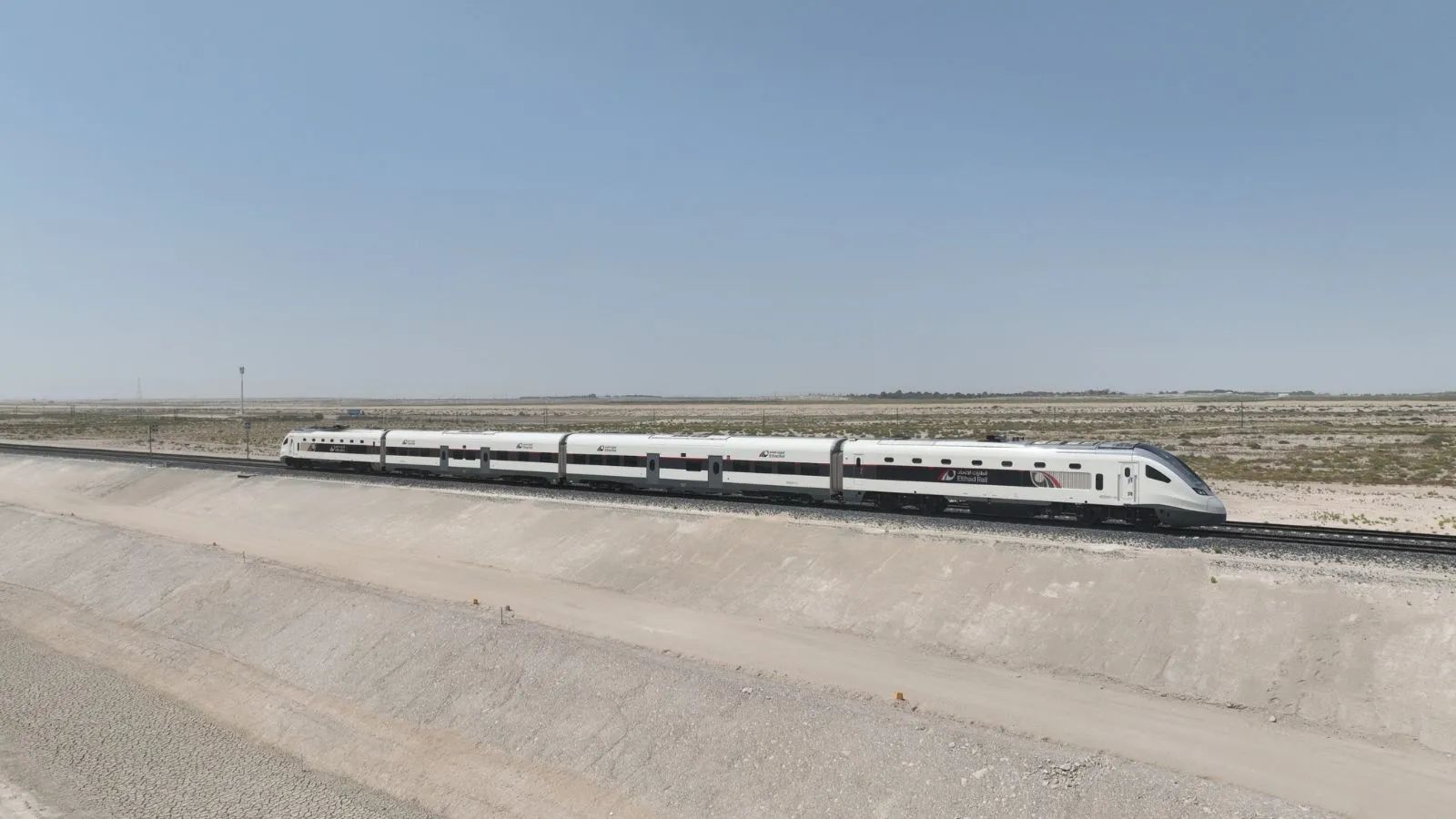
Let us strip away the bureaucratic press releases and examine the cold, hard reality of the machinery. The new rail network operates on a scale that feels almost unfathomable when contrasted with the slow crawl of highway traffic. These passenger trains are engineered to slice through the geography at speeds reaching 200 kilometers per hour.
But speed is a hollow metric without utility. The real magic happens inside the cabins.
Imagine exchanging the cramped, high-alert environment of a driver’s seat for a quiet, climate-controlled sanctuary. Instead of tracking the brake lights of the vehicle ahead, a passenger watches the dramatic shift from the rolling red sands of the interior desert to the stark, dramatic silhouettes of the Al Hajar Mountains, all while sipping a coffee.
For the remote worker, those 105 minutes turn into a highly productive mobile office with stable connectivity and spacious seating. For the exhausted parent, it is an uninterrupted window to sleep. The transition between the two emirates becomes a bridge rather than a barrier. It changes the train from a mode of transportation into an incubator for human potential.
The Environmental Reset
We cannot discuss the transformation of this corridor without confronting the environmental toll of our current habits. The highway is a combustion engine monoculture. Miles of idling cars and accelerating trucks pump carbon into the fragile desert atmosphere day after day.
The math behind rail transit is unyielding. A single train journey can displace hundreds of individual vehicles from the tarmac. By shifting the mass movement of people from individual rubber tires to a centralized, highly efficient steel track, the carbon footprint of the entire region undergoes a massive contraction.
This is the hidden benefit that won't necessarily register when a passenger buys their ticket, but it will be felt by the generation inheriting the region. It is an intentional step away from car dependency, mirroring the highly successful rail networks of Europe and East Asia, adapted specifically for the unique demands of the Arabian Peninsula.
Redefining the Weekend
The ripples of June 30 extend far beyond the Monday-to-Friday workforce. Consider the cultural and social isolation that long distances naturally enforce. Fujairah, with its pristine beaches, historic forts, and cooler maritime climate, has always been a coveted escape for city dwellers trapped in the concrete grids of Abu Dhabi.
Yet, the sheer logistical headache of the drive often kills the impulse to travel. A weekend getaway loses its charm when a significant portion of that weekend is spent fighting traffic through the mountains.
Now, the calculation changes entirely. A family in Abu Dhabi can decide on a whim on Saturday morning to lunch by the Gulf of Oman. Capital residents gain effortless access to the rugged beauty of the east coast, while communities in Fujairah receive an influx of domestic tourism without the associated gridlock. Cultural exchange within the borders of the country accelerates. The emirates draw closer together, not through policy, but through proximity.
The View from the Platform
As the launch date approaches, the anticipation at the stations is tangible. These structures are not just transit hubs; they are monuments to a new era of mobility. They stand ready to handle a massive influx of travelers who are eager to abandon the old ways of moving across the country.
There will be a moment, precisely 105 minutes after the first train pulls out of Abu Dhabi, when it glides smoothly into the station at Fujairah. The passengers stepping off onto the platform will not be exhausted. They will not be rubbing their eyes or stretching out cramped muscles from a long drive. They will walk out into the coastal air fresh, relaxed, and entirely present.
The highway will still be there, looping through the rocks and baking under the sun. But its grip on the people of the UAE will be permanently broken.